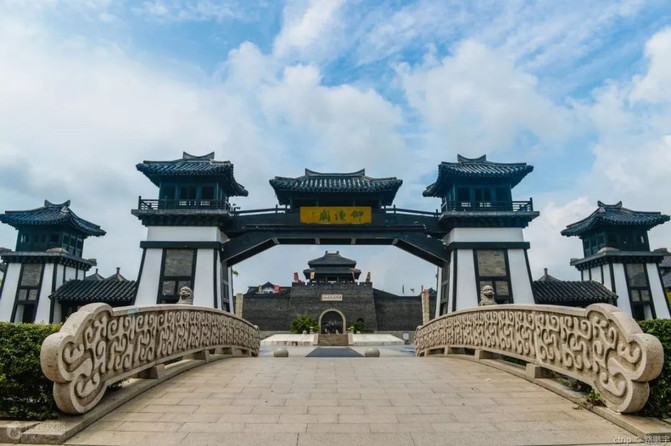
It is the symbol of boundary between Yancheng Tourism Area and the outside world. “Lord-Worshipping Tower”, as the name suggests, is the attic to look up at Yan territory.
It is the symbol of boundary between Yancheng Tourism Area and the outside world. “Lord-Worshipping Tower”, as the name suggests, is the attic to look up at Yan territory.
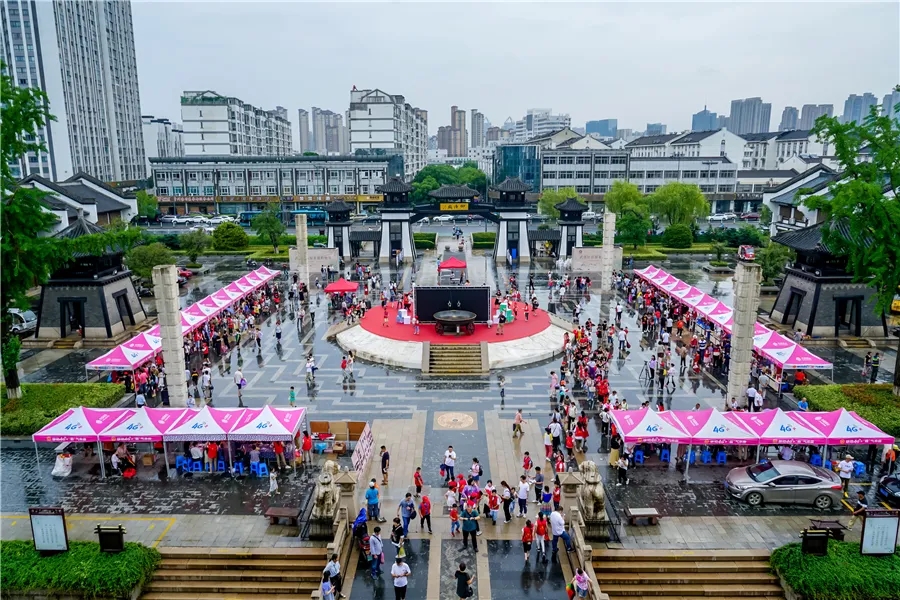
The huge vessel in center of the square is called Double Beast Three Wheels Plate Bronze Plate. It is presented by China cultural relics Association and is magnified in the proportion of 1:10 to the original bronze plate unearthed in Yancheng in 1957.
The origin of bronze three disc plate is now collected in Chinese History Museum. The plate has a unique shape, with a height of 15.6 cm, a diameter of 26 cm and a bottom diameter of 14.5 cm. The plate has open mouth, shallow belly and encircled feet. Three rotatable wheels with six spokes are installed under the bottom of the plate, with two beasts with long necks protruding from both sides of the front wheel looking back. Beast heads have crowns, and big eyes open, with snout extending forward. Beast bodies are decorated with scale patterns, triangular patterns, Qiequ patterns (curved and hooked patterns derived from animal elements), etc., and the beast is like drinking water. There are braids around the plate. It should be a very exquisite dinner plate or fruit plate in the Spring and Autumn period, which can move back and forth in front of guests to meet their needs. This bronze three wheel plate has reasonable structure, integrating practical utensils and works of art through production processes of casting, welding, tenon and mortise assembly and other processes, showing superb level of bronze technology. There is only one such three wheel plate ancient bronze ware at now. It is an artifact with strong regional style and era characteristics in Wu and Yue bronze ware.
The four stone carvings embedded around the bronze plate are Blue Dragon, White Tiger, Rosefinch and Xuanwu, protecting the east, west, north and south. On the left and right are Bell Tower and Drum Tower. The four Cong columns at the four corners of the square are made of multicolored stones, each weighing 30 tons.
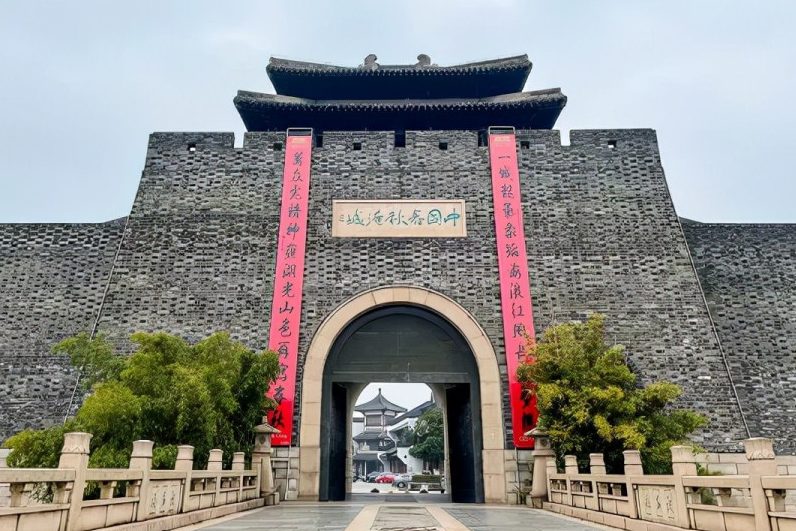

It is the tremendous and sublime Yancheng tower. The “Spring and Autumn Yancheng Relics Park” on it is inscribed by calligrapher Shen Peng. The font has profound artistic conception, elegant style, ink with spirit, and overwhelming power.
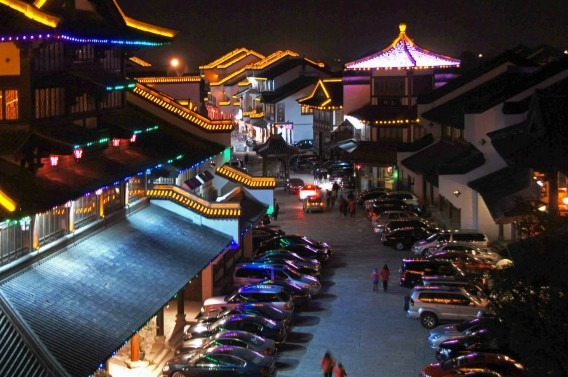
Bread is the staff of life. Chinese people have a long history of enjoying palatable food. The Food Street pays attention to local characteristics, takes Wujin’s specialty as the classic, absorbs characteristic delicacies from all over the country, and creates Chinese People’s Food Street. The Food Street always has endless flows of people waiting to be served as sumptuous lights glitter.
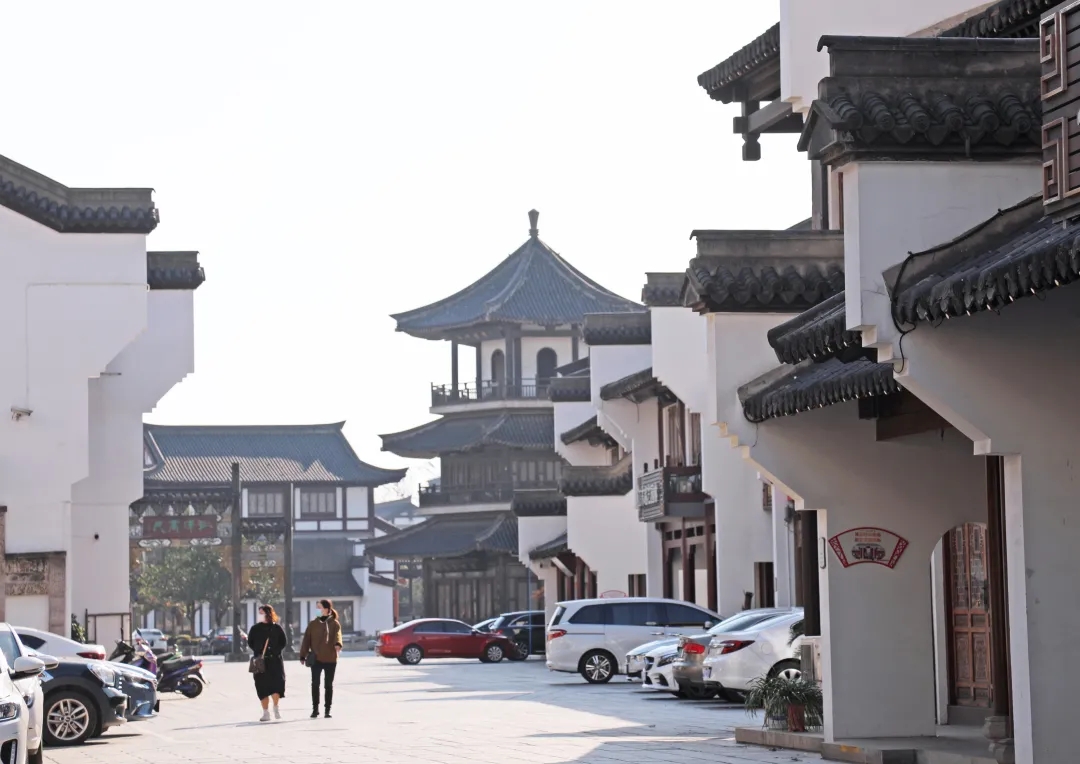
Wujin is the birthplace of Menghe Medical School that has cultivated generations of famous doctors since ancient times. Wujin has profound cultural heritage of traditional Chinese medicine famous all over the world in late Qing Dynasty. It is known as “Wuzhong famous doctors are the best in the world and Menghe famous doctors are the best in Wuzhong”. Relying on profound precipitation of Wujin Medical School, Yancheng Traditional Chinese Medicine Street has born various characteristic traditional Chinese medicine centers and health centers. Traditional Chinese Medicine Street has played a positive role in inheriting and prospering traditional Chinese medicine culture just like what is written on stone archway at the entrance of the street, “Good Virtues Cherished by Doctors”.
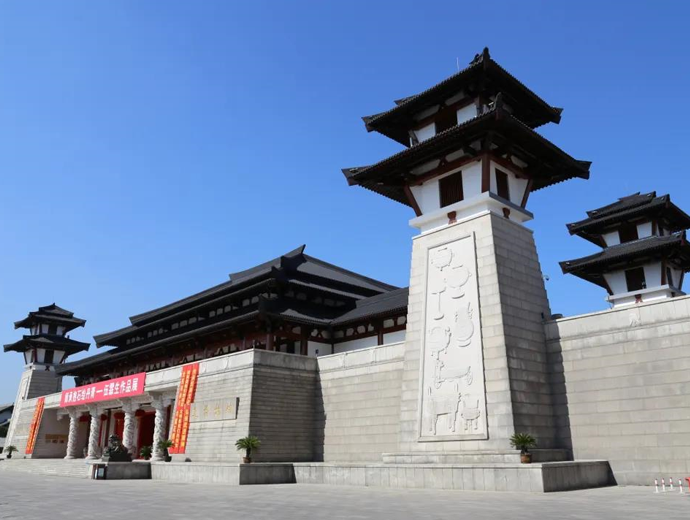
Yancheng Cultural Street is adjacent to Traditional Chinese Medicine Street and Food Street. The neighborhoods are connected by rivers and small bridges, and pavilions, pavilions, pavilions and pavilions are arranged in a staggered manner, showing the charm of Wu and Yue. With Yancheng Museum and Wujin Cultural Museum as the core, the cultural street gathers a number of cultural experience projects such as intangible cultural heritage crafts, antique appreciation, calligraphy and painting art, and intensively displays unique and profound cultural heritage of Changwu Area to tourists.
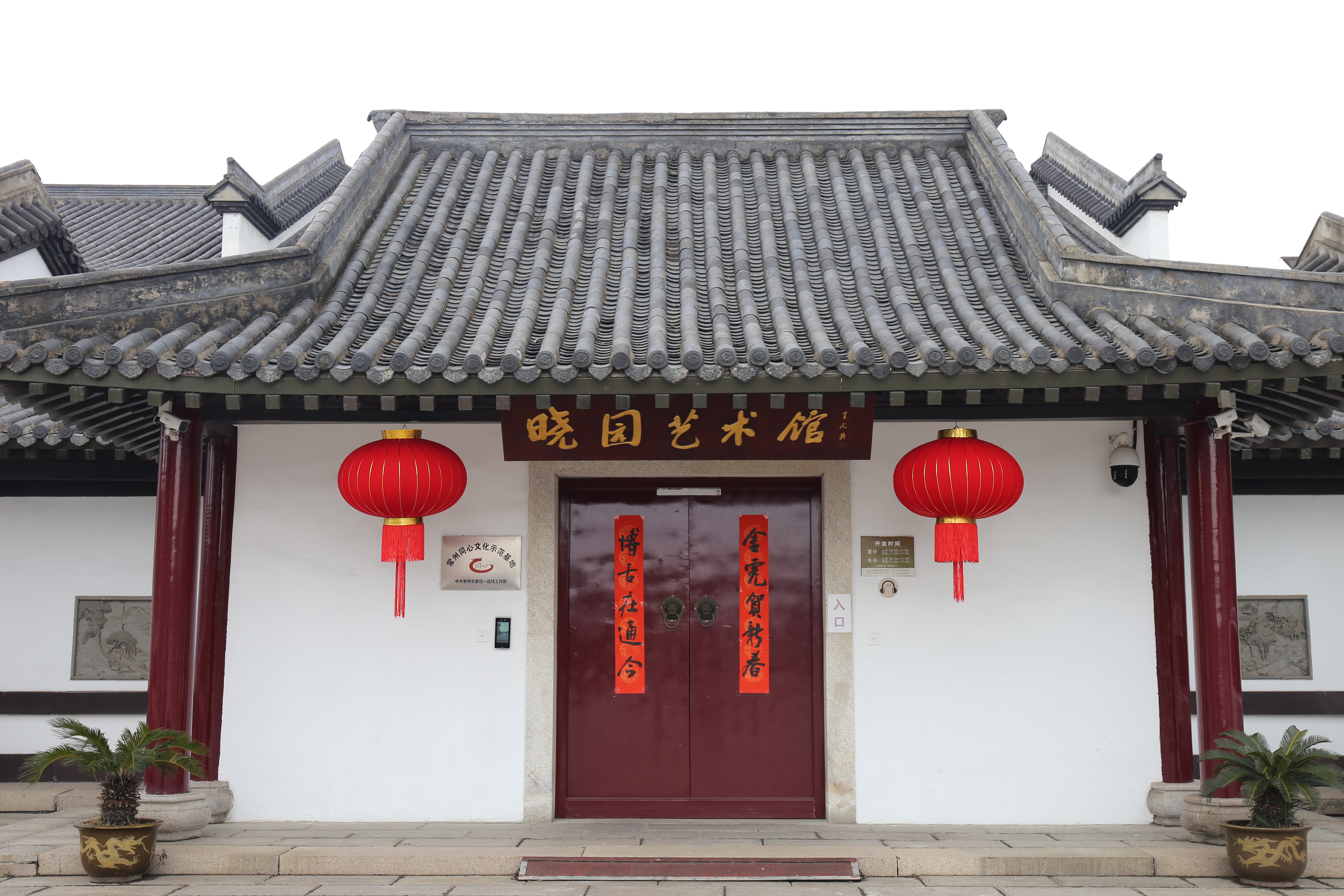
Yuan Xiaoyuan Art Museum is located in Yancheng Culture Street. Mrs. Yuan Xiaoyuan is the first female tax official in China and the first female diplomat in China. She was born in a calligraphy family and used to be named Yuan Xingjie. Her uncle was an imperial teacher. Now the plaque of “Xinhuamen” in Zhongnanhai, Beijing, is just the work of her hands. Her grandfather Ye Chuchen was famous for poetry, and her sister Yuan Jing and niece Qiong Yao were famous for novels. In her youth, Mrs. Xiaoyuan broke through family barriers and went to work study in France alone. She served as Deputy Director of Xiamen Tax Bureau and became the first female tax official in China in the 1930s. She served as Vice Consul of the Consulate of Calcutta, India in the 1940s, and became the first female diplomat in China. She gave up her American citizenship and settled in Beijing in the 1980s. She was a member of the sixth and seventh CPPCC National Committee and President of Beijing International Chinese Character Research Association. Her life experience is a legend. Mr. Xiaoyuan died at the age of 101 in 2003. Wujin District established Yuan Xiaoyuan Art Museum in 2011, which collected and displayed Mrs. Yuan Xiaoyuan’s highly praised works of poetry, calligraphy and painting, as well as photos, certificates and objects from various periods.
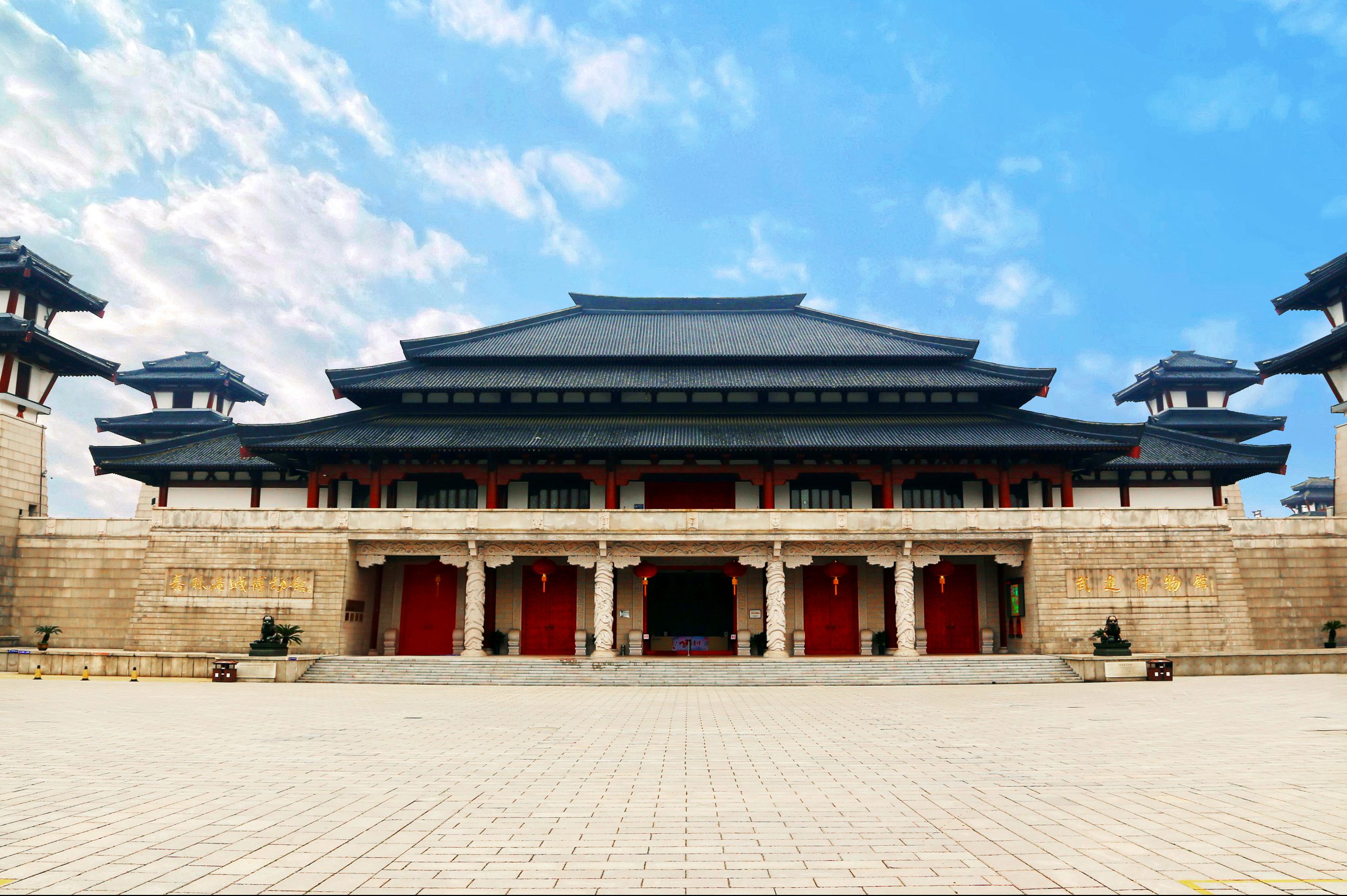
Located in Yancheng Traditional Business Street Culture Street, it is a two-story building facing the East, imitating the characteristics of Han Dynasty, with a magnificent architectural style. Let’s first look at the pair of bronze lions in front of the gate. They are replicas of bronze lion in front of the Qianqing Gate of the Forbidden City in Beijing. The original bronze lion in front of the Qianqing Gate of the Forbidden City was cast during the reign of Yongzheng, and only two pairs were copied after the founding of the People’s Republic of China. One of them is a copy of the pair in front of Yancheng Museum. The other pair of copies is not in China, but kept in the hall of the Chinese Embassy in Germany.
More than 3,000 articles are collected in Yancheng Museum, including 7 first-class products, 41 second-class products and 545 third-class products. The museum is featured by collections like Liangzhu culture jade articles and primitive celadon articles from the Spring and Autumn period, textiles from Ming Dynasty, and works of famous calligraphers and painters in modern times. Jade Cong with 11 animal face patterns, large jade wall with a diameter of 32 cm, and jade belt hook from the Liangzhu Culture period, canoes and primitive celadon tripods from the Spring and Autumn period, and exquisite works of the museum’s collection including embroidered overlapping flower textile with netted patterns from the Ming Dynasty, gold woven textile with Dancing Phoenix Folded Brocade, and the Painting of Two Eagles completed by Liu Haisu, Huang Zhou, Chen Dayu, and Xia Yiqiao together.