分类: Yancheng Spring-Autumn Amusement Land

  • 11.Taoism

    11.Taoism


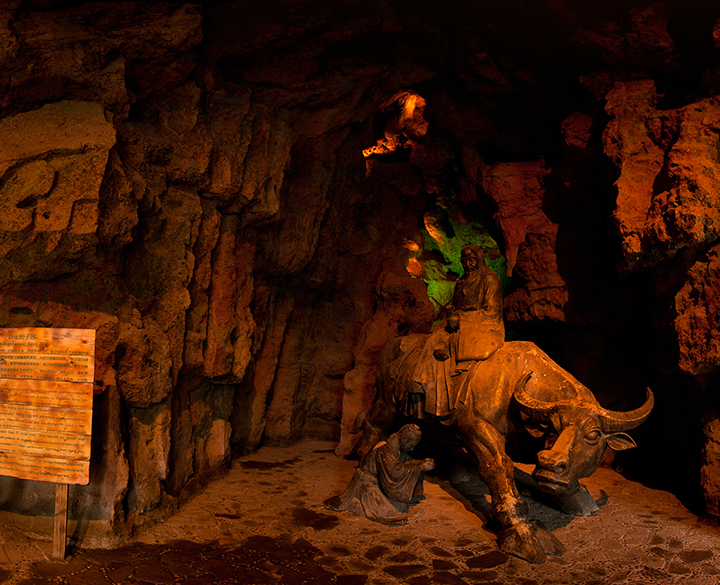
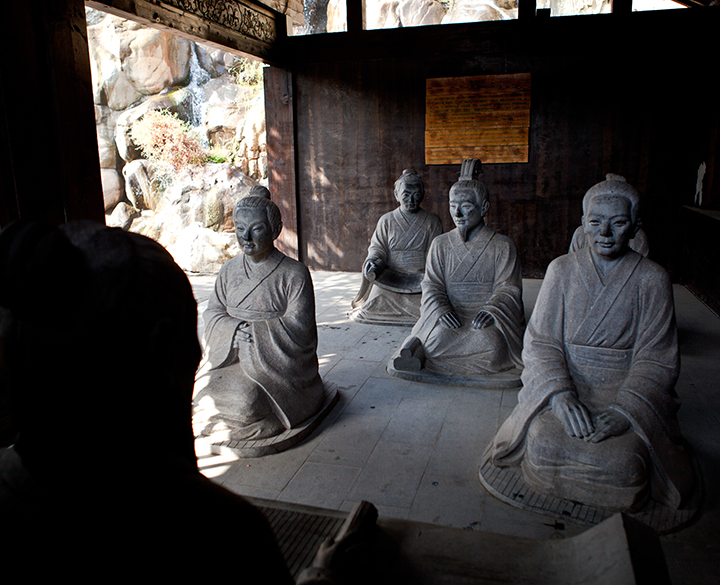
    Legend says Laozi the grandmaster established this school. All its followers argued “the way of following nature” and “the importance of doing nothing”. In particular, Laozi himself and Zhuangzi separately composed Tao Te Ching: The Way and its Virtues and Zhuangzi: Wandering of the Way.

    Laozi, also called Laodan, has been revered as the “Old One”. It is said this master later headed west on a black ox. Hangu Pass’s guard-in-chief Yin Xi, on the Sky-Watching Pavilion, suddenly saw a purple vapour rising in the east. He said to his underlings a sage must be coming here soon. As he had said, Laozi on an ox arrived slowly within 3 days. Yin Xi asked the master to leave him some words, otherwise he would not allow him to take leave. Then Laozi the Lord wrote Tao Te Ching, a short book of 5,000 characters influencing later China and the world at large.
  • 12.Mohism

    12.Mohism


    Founder of Mohism is Mo Di. Those engaged in debates were called “Mobian”. Those engaged in martial arts were called “Moxia”. The leader is called “Ju Zi”. Most of the Mohists come from lower status, with strict internal organization and discipline. “Those who kill will die for it and those who hurt will be punished”. They took promoting benefits and eliminating harm as educational purpose, and pay special attention to hard practice. Core ideas of Mohist School included “Universal Love”, “Anti-offense” and “Sparing Usage”, which advocate respecting talents and appointing capable people. Mohism and Confucianism were known as Famous Theories in the pre-Qin period.

    In addition, Mohism studied mechanics, optics, logic and military attack and defense. Mohist’s Mojing (Mohist Canon) is similar to an encyclopedia, in which physical principles such as “Small Hole Imaging” were first put forward.

  • 13.Militarism

    13.Militarism


    During the Spring and Autumn and Warring States Periods, wars erupted from time to time. Its typical figures were Sun Wu and Sima Rangju in the former period as well as others in the later period like Wu Qi and Sun Bin. In particular, Sun Wu has been respected as the “Forefather of Military Arts” and the “Sage of Military Affairs”. The Art of War, his magnum opus, was the oldest book in this regard. Thanks to its far-flung impact, the monograph has been reputed as the “Classic of Military Thought”.


  • 14.Confucianism

    14.Confucianism


    Confucianism pervaded more 2,000 years of feudal China. Since Emperor Wu of Han prioritized Confucianism before all others, the school represented by Confucius, Mencius and Xunzi had gradually become the mainstream thought permeating traditional Chinese culture.

    Confucius, the founder of Confucianism, claimed a state shall be governed through ritual and virtue. He initiated private education, thus being reputed as the forerunner of plebeian education. History records “The Confucian master has 3,000 disciples, including 72 sages”. The Analects of Confucius has venerated as one of classics of Chinese thought and culture.

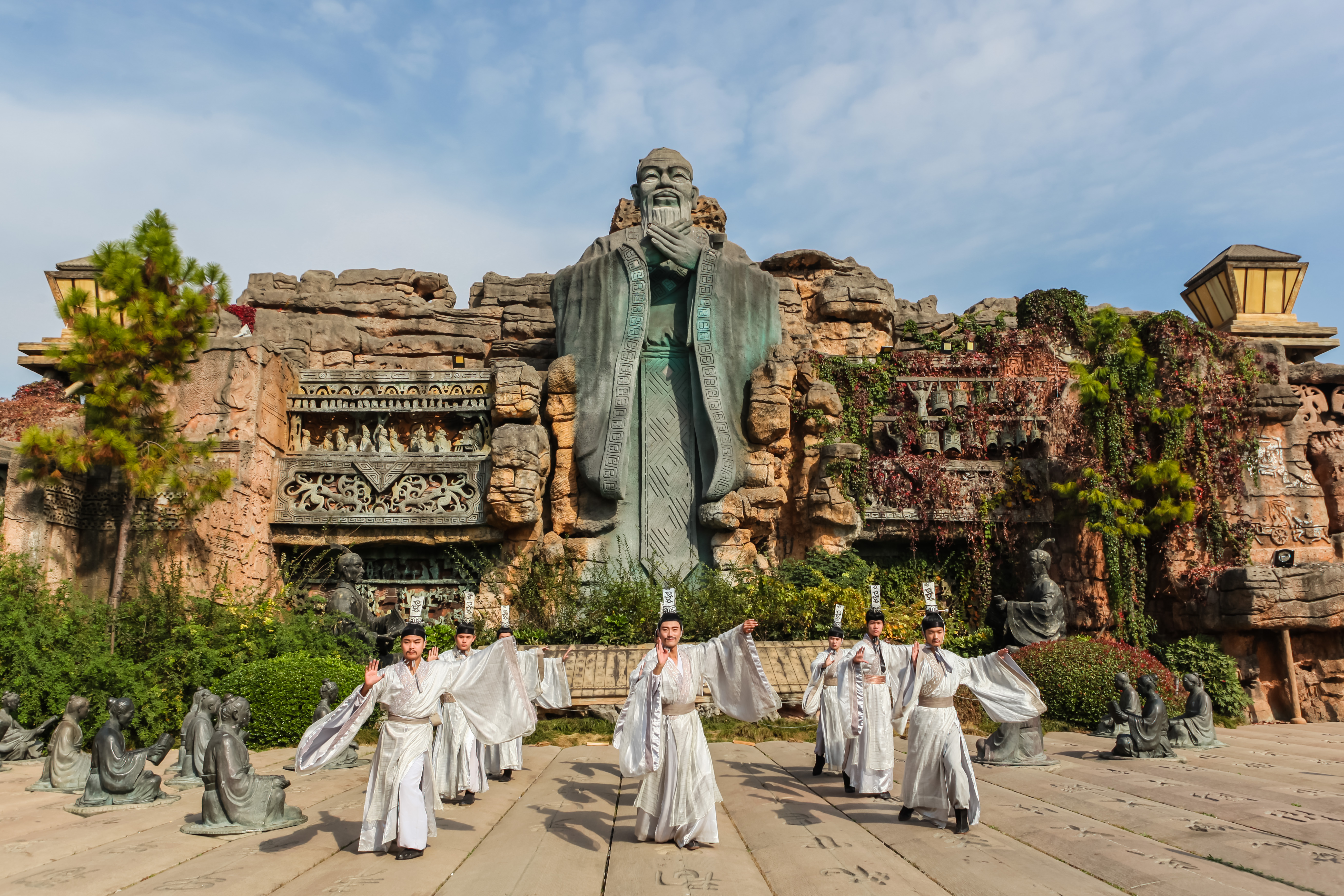
    The statue of Confucius standing on the slope is 17 meters’ tall. The master, leaning forward with both hands clasped together, appears an amiable old man indeed. This image embodies Confucianism’s five virtues: moderation, kindness, respectfulness, frugalness and modesty. The stone inscription on the hill surface tells us what Confucius had undergone through his lifetime. Below this master are located statues of two junior sages—Mencius and Xunzi.

  • 15.Legalism

    15.Legalism


    Typical Legalist Hanfeizi argued the state shall be ruled through stern punishment and strict legislation. Hanfeizi, vintage work of the thinker, has influenced ancient and modern China. This school created a profound impact on Chinese history.

  • 16.Minor-Talk School

    16.Minor-Talk School


    “Minor-Talk” originated from Zhuangzi. As said in “Records of Literature and Art”, The Book of Han Dynasty, “The school of minor talks is derived from minor officials who loved talking about anecdotes. It is about gossips, chats and suchlike.” Such minor officials mainly took charge of recording what the plebs talked about, namely legends. Yu Chu in Western Han Epoch was known as one of paragons of this school. Yu created An Anthology of Stories on Zhou Era, the first collection of stories ever in ancient China.

  • 17.Logicism

    17.Logicism


    What followers of this school talk is the name and essence of things, rights and wrongs of cases. In fact, it was the school of logic in ancient times, which boasts typical figures like Gongsun Long, Deng Xi and Hui Shi. Such logicians were famous for being expert at analyzing the “name” and the “essence”. Up till now, their classic dogmas like “White Horse Is not a Horse at All” have been still alive.


  • 18.Marketplace Commercial Street

    18.Marketplace Commercial Street


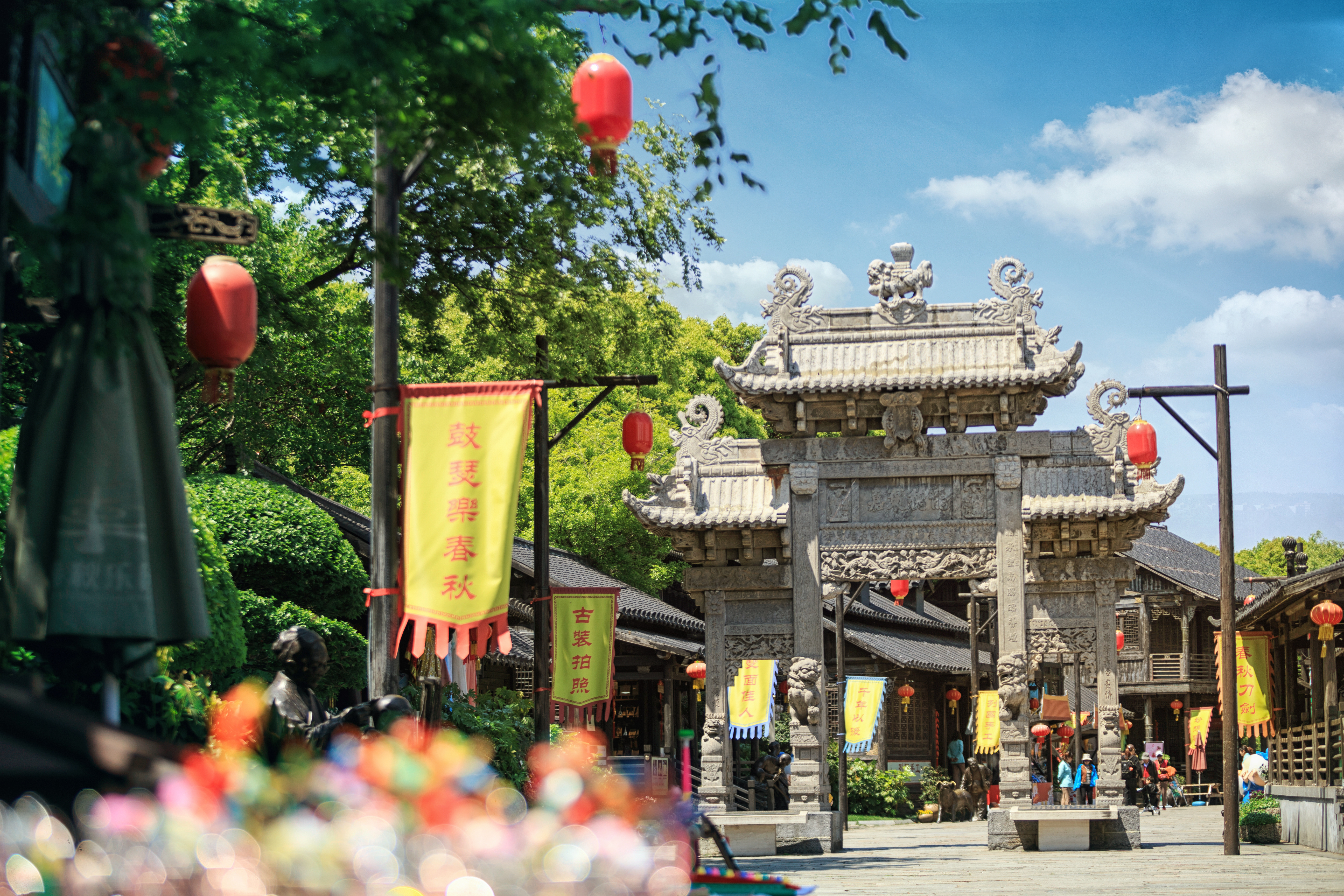
    Marketplace Commercial Street reproduces prosperity of thirty-six elements including ancient folk acrobatics, Quyi, hawking and divination, as well as people shopping in the city, with ancient architecture in antique style and strong Chinese traditional flavor, combined with copper plastic landscaping and literary roadshows.

    Commodities sold in Marketplace Commercial Street are mainly handicrafts with local characteristics of Changzhou. It is also a centralized exhibition area for intangible cultural heritage projects in the park.

    There are three memorial archways from the Qing Dynasty in Marketplace Commercial Street, namely, Zhongyi (loyalty and righteousness) archway from the reign of Qianlong, Jiexiao (sparing and filial piety) archway from the reign of Guangxu, and Gongde (merit) archway from the reign of Xianfeng. The three archways have sublime but simple shapes and exquisite stone carvings, bearing high artistic value. They are also meaningful attempts to carry out cultural relics protection in different places in Yancheng Tourism Area.

  • 19.Spring and Autumn Water World

    19.Spring and Autumn Water World


    Spring and Autumn Water World, as the main project of Spring and Autumn Paradise in summer, is built with Splashing Square, Aqua Castle and Surfing Zone. Tourists may enjoy the coolness and show their vitality here in hot summer.


  • 20.Relic Square

    20.Relic Square


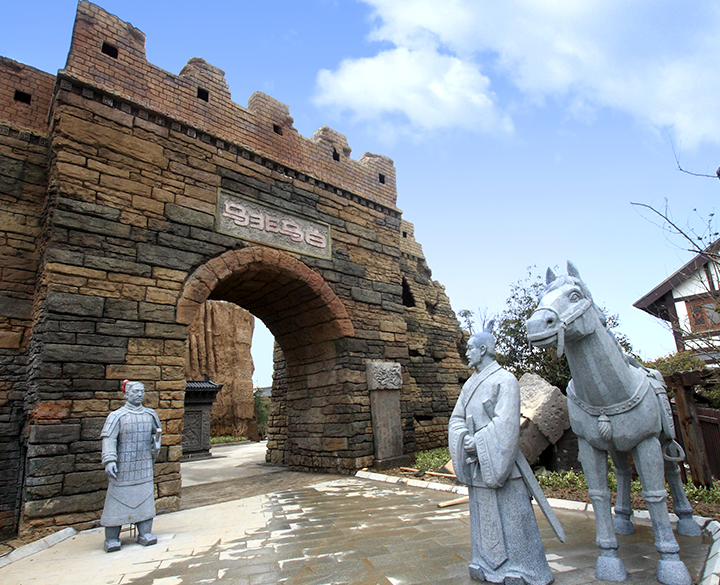
    Relic Square, located in the central area of Spring and Autumn Park, connects main areas such as Zhuzi Baijia Garden, Yancheng Relics Park and Amusement Theme Experience Area.

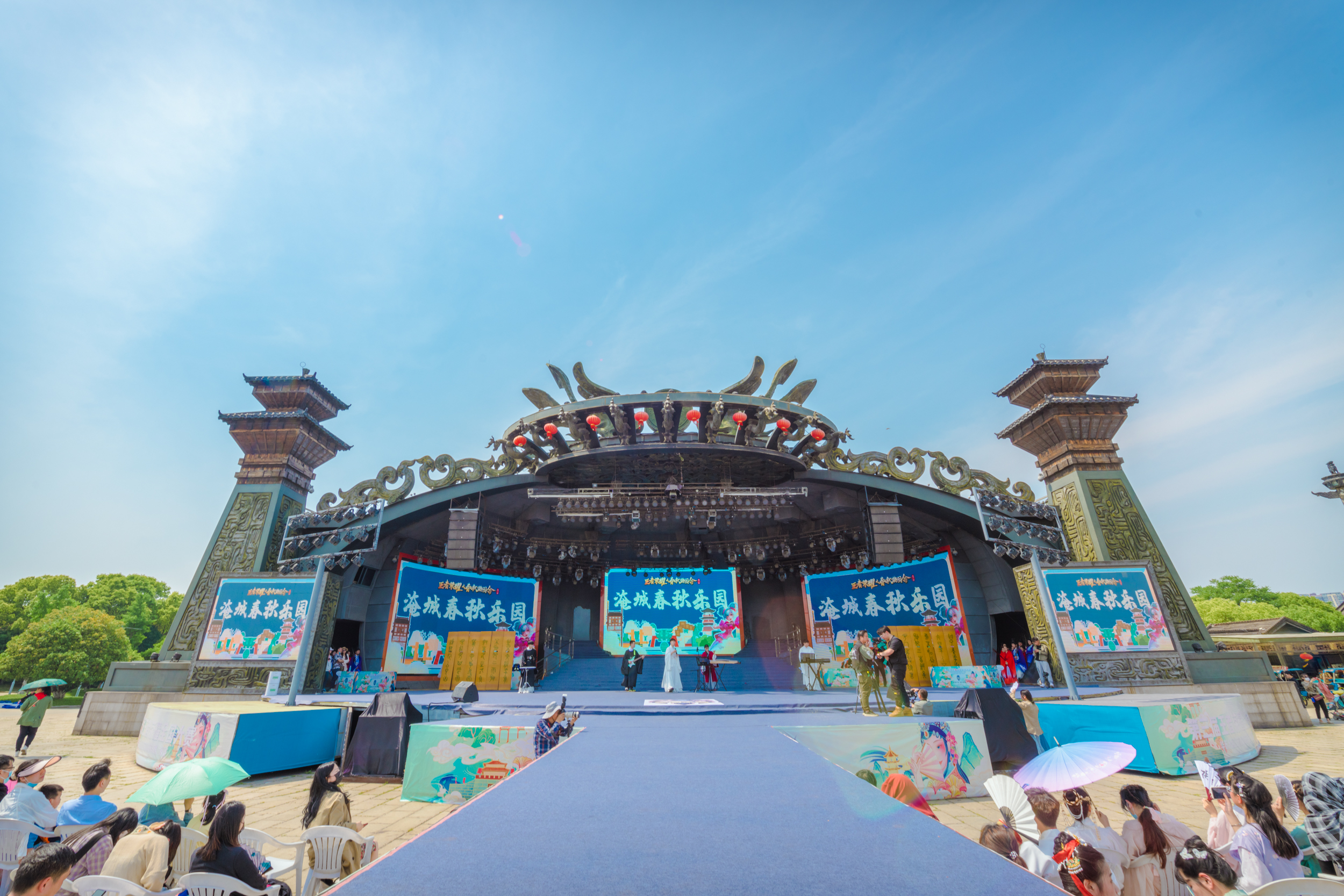
    Grand Spring and Autumn Stage in the center of the Relic Square has wonderful performances during major festivals and summer night parks.

    Yancheng Relics Park is at the west of the Relic Square with a history of more than 2,700 years. The three ancient cities and rivers have unique shape. It is the most complete and unique ground city site in the Spring and Autumn period found in China.