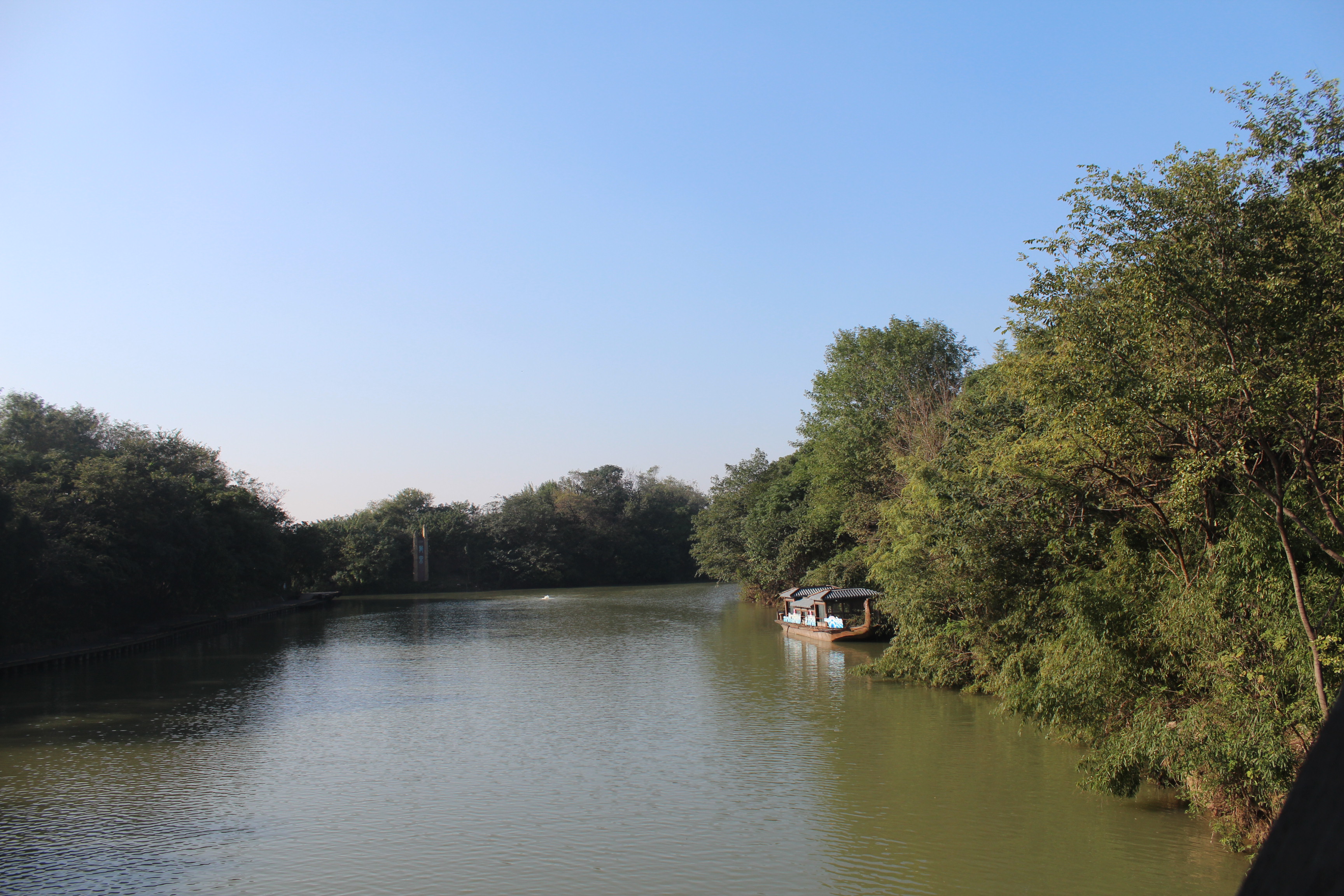
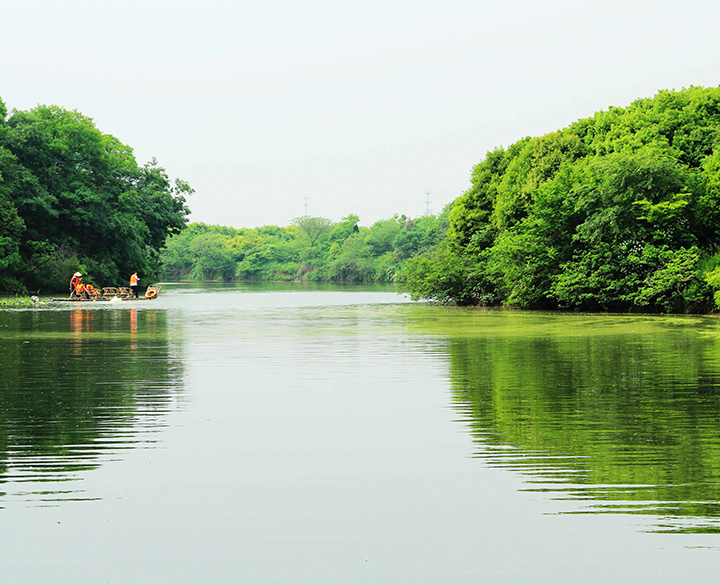
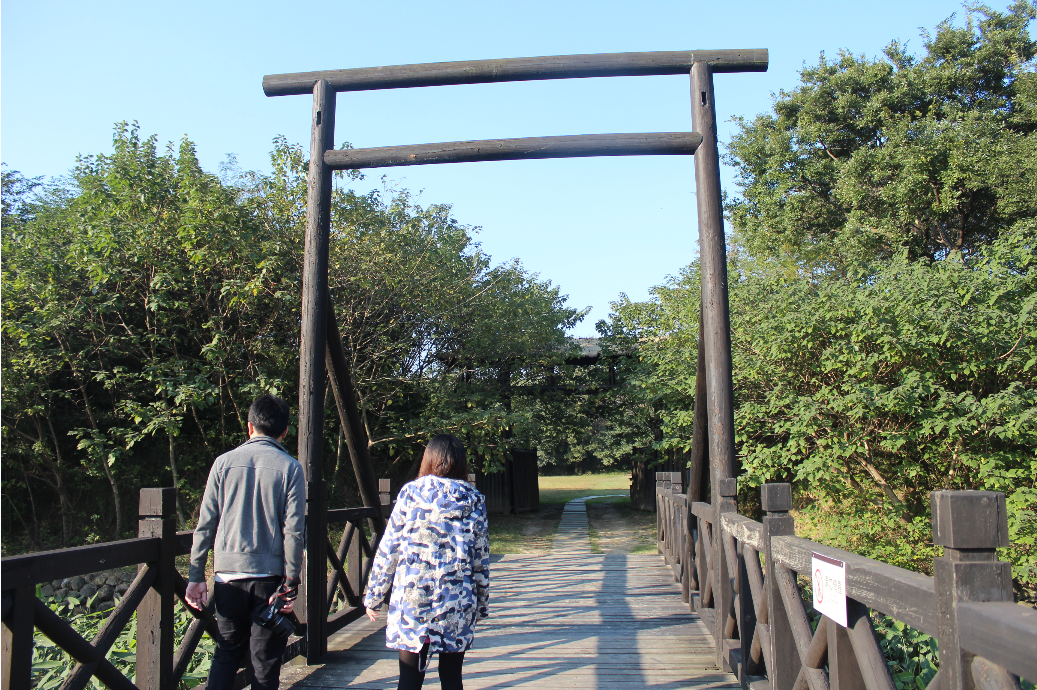
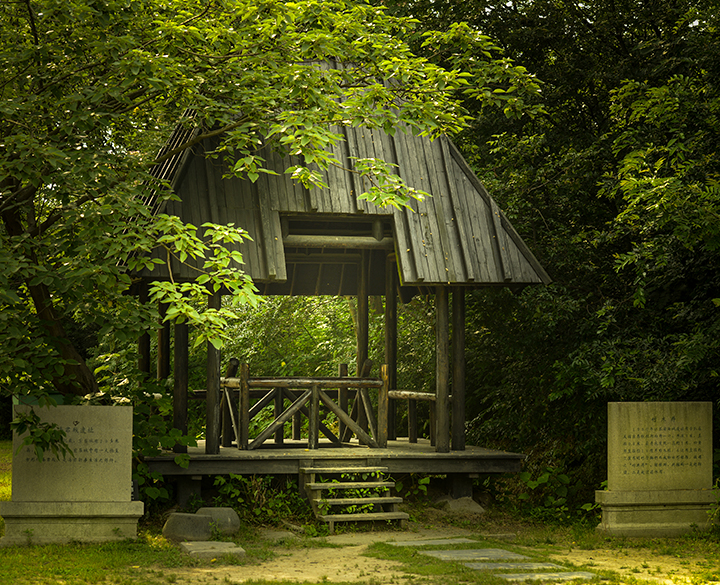
Yancheng takes on a unique look because it falls into three circles from inside to outside: imperial city and its moat; inner city and its moat; outer city and its moat. Now we stand outside the outer city. Cross the moat bridge at the outer city and we will come into this antique scenic area.
The outmost moat is the first of its kind we meet here. Hi, please look along your right hands—the high portion inside this moat is called “the outer city’s outer wall” and the left “its inner wall”.
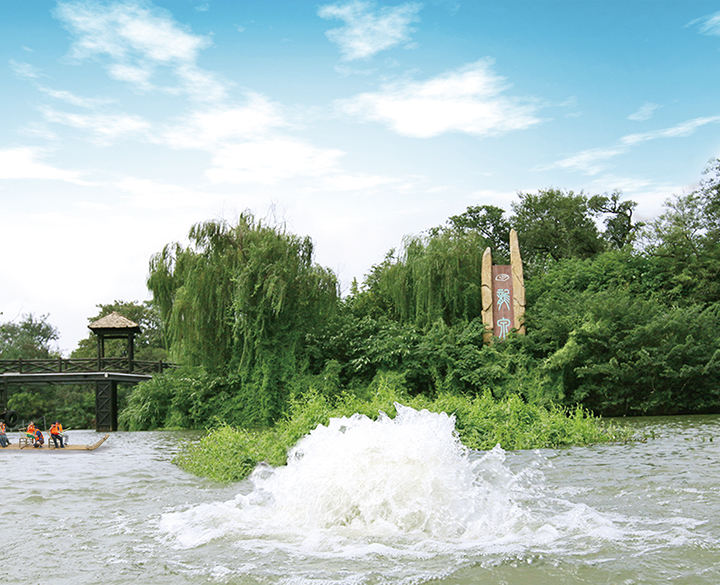
The place with foaming water, not far from here, is Dragon Spring, also called Dragon Pool. The pristine pool is infinitely deep. Local villagers ever fathomed it with a pole as long as a dozen or so meters, but still failed to touch the bottom despite all their effort. As a drought descended upon Southern China in 1934, Changwu Area (Changzhou along with its Wujin District) suffered so much that myriad rivers went dry and 1,000 mu or more fields cracked open. Instead, the spring water here looked as crystal as usual, but even gurgled endlessly. So, legend says the pool must be connected with the Dragon Palace of the Eastern Sea. As a local ballad puts, “O Dragon Spring rises from the East Sea far away; it tastes sweet and fresh over so many centuries. Like a mother, the spring nourishes all creatures on both sides. All this is ascribed to the Dragon Maiden’s White Jade Turtle.”
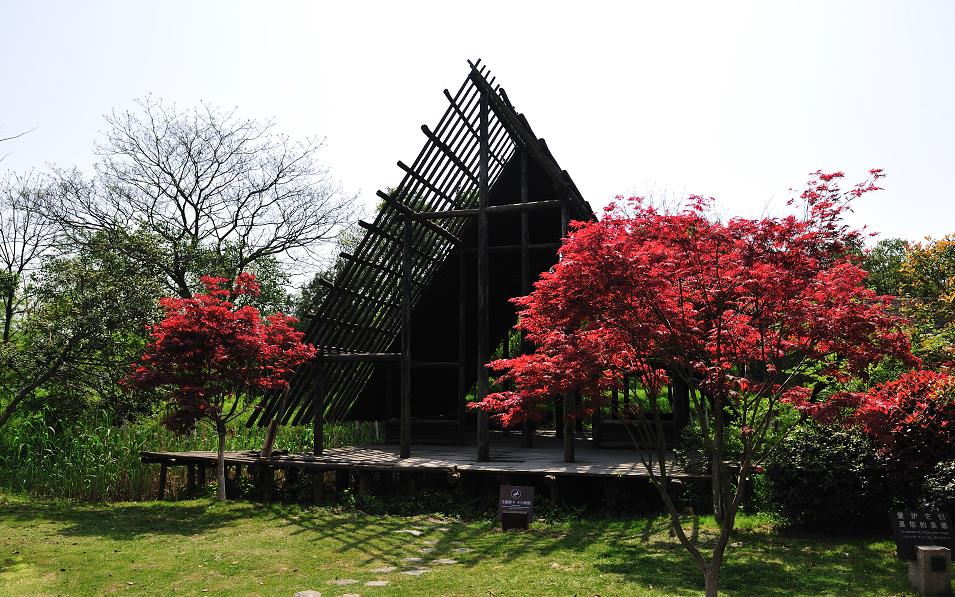
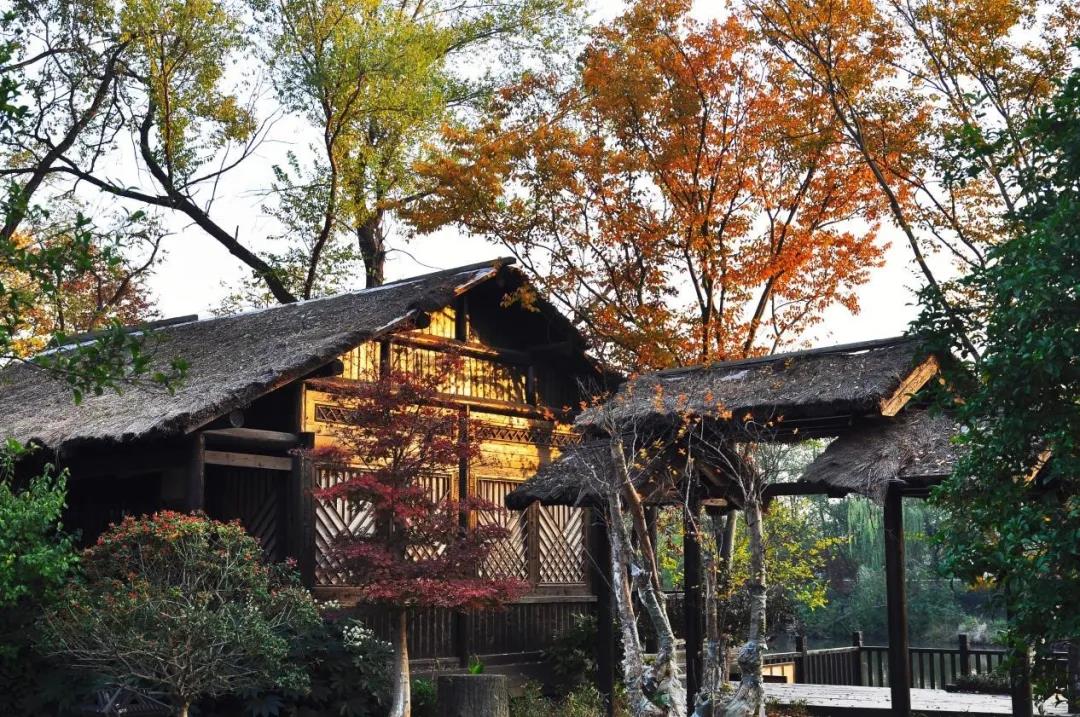
What pleases the eye to the left is a row of rustic dwellings, which imitate the ancient cottages of the Spring and Autumn Epoch. Owing to the heavy rainfall here, these folk houses, in fact wood structures, had deteriorated with great speed. Within the relics park, there is therefore no such dwelling unscathed till now. What stand the test of time are simply the cities along with moats and numerous antiquities excavated all these years.
What we can see in the front left-hand side is the relic site where Yue Fei, a generalissimo of the Southern Song, ever appointed major generals. When Jurchen army invaded the frontier during Jianyan Period, the generalissimo along with his troops was stationed here to fight the enemies.
Now we can see the second moat of age-old Yancheng. The moat is 4 m deep on the average, but may be a dozen meters or so deep as well. The width, normally 30-50 meters, may be 60 meters at most. There have been 4 canoes unearthed from the moat thus far. The 11 meter-long canoe now belongs to the National Museum of China and the 4.2 meter-long lies in Nanjing Museum. The remaining two have been collected in Wujin District Yancheng Museum. Researchers had dated the old-time canoes using the carbon-14 isotope. In particular, the canoe as long as 7.45 meters has been 2800 years old. The oldest and best-preserved boat discovered ever in China has been dubbed the “First Boat under the Sun”.
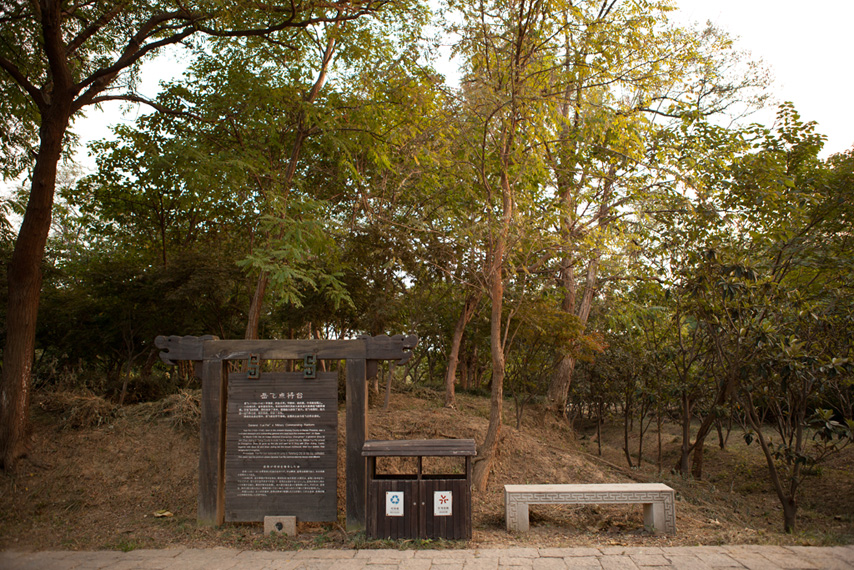
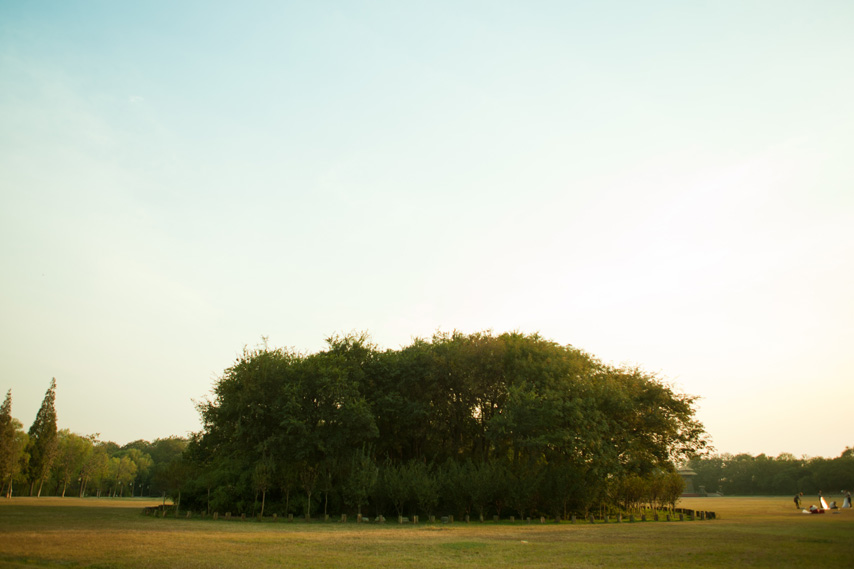
Now feast our eyes are three tall mounds: Head, Belly and Feet in order. In 1991, archaeologists excavated the head mound, thus discovering the owner’s coffin and nearly 300 burial artifacts. The tomb nestles in the outer city, which reveals its special connection with age-old Yancheng. Put it another way, the deceased should belong to the aristocracy at that time. It is noteworthy that the burial objects include some ornaments and tools like pottery spinning wheels and strings of jade pearls. So, the owner should be a female. Legend says she was one of three daughters of Yan State’s Lord, whose tombs were the mounds mentioned above. Long long ago, the Lord had a kind-hearted daughter called Princess Lark. The gorgeous maiden was the apple of the royal couple. This girl fell into love with lute, chess, calligraphy and painting. Again, she sang and danced with great finesse. Above all, the much-gifted princess was diligent and beautiful. Liucheng nearby had an ambitious prince, who became the Lord Yan’s son-in-law using dishonest means. When the Lord went out one day, the hideous prince got the key to the backyard garden in the name of his wife and stole away White Jade Turtle—the treasure of Yan State. As soon as he knew the news, the Lord got furious and executed his beloved Princess Lark. Later he made clear the truth and felt full of remorse. He buried his lovely daughter once more. This is the origin of the three mounds still alive on the lips of locals.
Inside and outside Yancheng, there were once hundreds of mounds, of which Stone Grinder Mound occupied 90 mu, the largest of all. These were believed to have relations with the city defense. In 1987, archaeologists excavated Ganjia Mound, from which more than 40 potteries and celadons as well as remaining bones have ever since seen the light of day. This discovery has further proved that these mounds are all ancient tombs.
Yancheng’s inner city sprawls 1,500 meters, about 3 li (a Chinese unit of length, 1 li=500 meters) while the outer city stretches 3,500 m or 7 li. Their areas fit well in with the relevant account in Mencius. Besides, the urban design has its own unique mystery. In a bird’s-eye view, the entire relic site looks quite like the Eight Trigrams according to Taoism and Geomancy. It is said the outmost moat had eight brooks and four watergates at the earliest time. Hong Kong based geomancer Mai Rongyao, having investigated the site, concluded the eight brooks represent eight trigrams in I Ching. The construction time shows Yancheng was the earliest city in the world to follow the mysterious geomancy. So, it is also called “First City of Chinese Fengshui”.
Originally, Sun Wu’s Thatched Cottage was an ordinary thatched cottage. It is said that Sun Wu, the soldier saint, once lived in seclusion here to avoid war and study the art of war in memory of Sun Wu. Later generations renovated the hut where he lived in memory of Sun Wu. The thatched cottage was repaired and transformed again in 2019, adding functions opening to tourists such as tea tasting, calligraphy and painting, health preservation and leisure.
The third moat in Yancheng from outside to inside is called Imperial City River, which is 500 meters long and 30 meters wide surrounding Imperial City.
Imperial City, also known as Ziluo City, is located in the center of Yancheng Relics Park and is square as a whole. The high wall around Imperial City is called Imperial City Wall, which is built by ramming earth.
It is said that Imperial City was the place where Yanjun ruled the government and lived. Archaeological discoveries of monuments like pillars and caves have proven that there were really large buildings here.
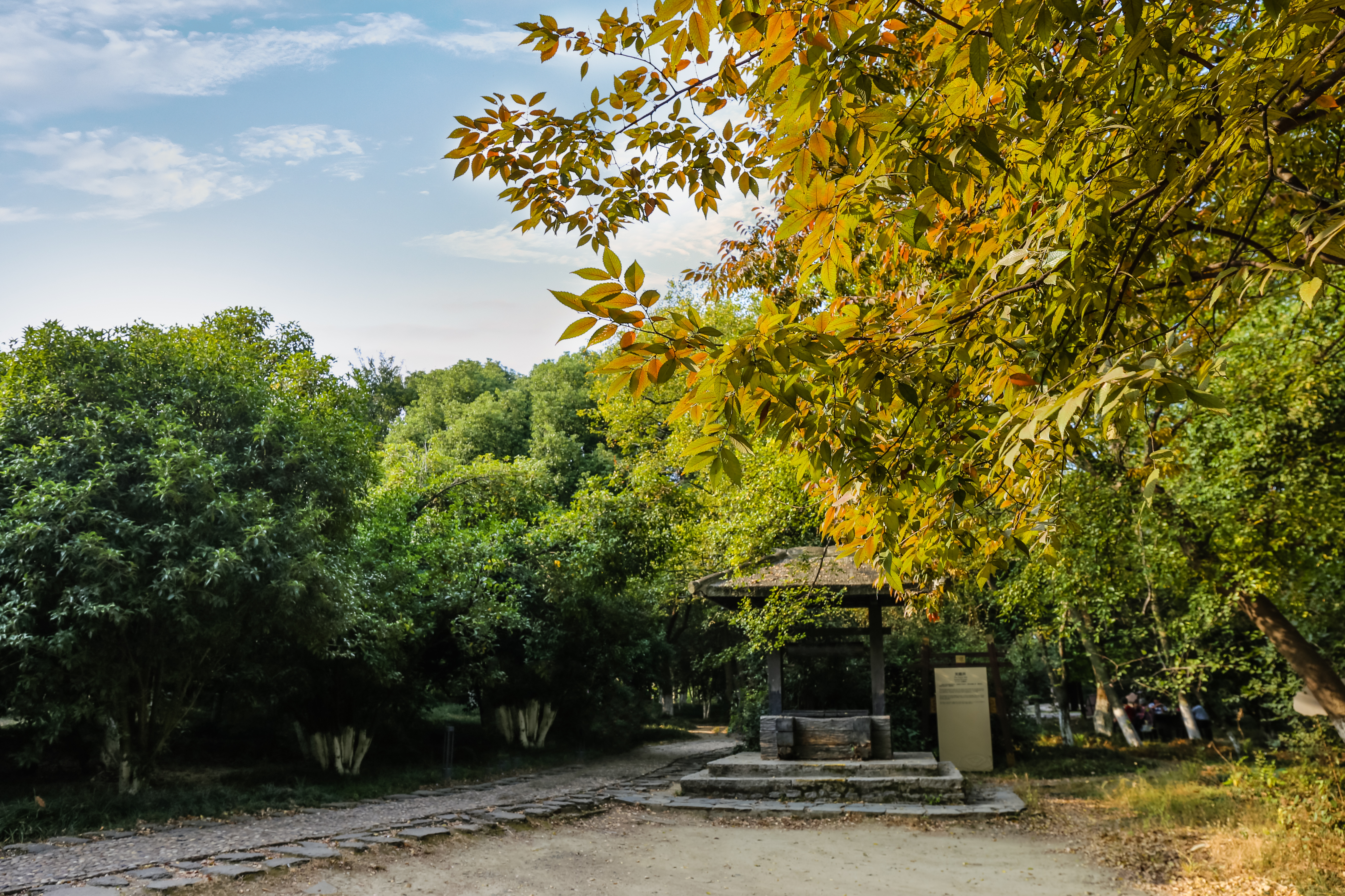
Bamboo Well is located in the Imperial City of Yancheng, with a history of about 3,000 years. The well is about 7 meters deep with square wellhead. Four corners of well are fixed with logs with a diameter of 10 cm. Thin bamboo is woven around the well wall to strengthen the well wall and filter the well water.
Such unique well is called “Bamboo Well”, as one of the early water well styles in China, mostly found in southern plain. Archaeologists found a pottery pot at the bottom of the well testified to be a tool used for fetching water, which proved that humans have settled here for a long time.