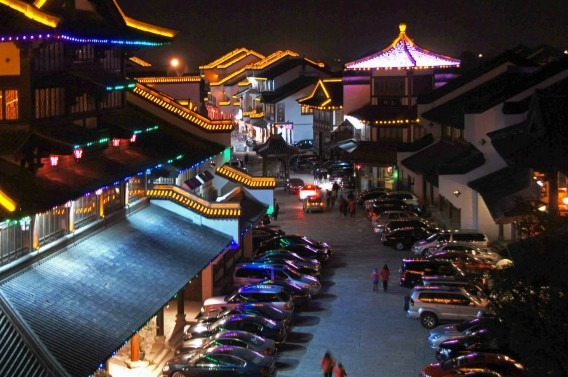
Bread is the staff of life. Chinese people have a long history of enjoying palatable food. The Food Street pays attention to local characteristics, takes Wujin’s specialty as the classic, absorbs characteristic delicacies from all over the country, and creates Chinese People’s Food Street. The Food Street always has endless flows of people waiting to be served as sumptuous lights glitter.
Wujin is the birthplace of Menghe Medical School that has cultivated generations of famous doctors since ancient times. Wujin has profound cultural heritage of traditional Chinese medicine famous all over the world in late Qing Dynasty. It is known as “Wuzhong famous doctors are the best in the world and Menghe famous doctors are the best in Wuzhong”. Relying on profound precipitation of Wujin Medical School, Yancheng Traditional Chinese Medicine Street has born various characteristic traditional Chinese medicine centers and health centers. Traditional Chinese Medicine Street has played a positive role in inheriting and prospering traditional Chinese medicine culture just like what is written on stone archway at the entrance of the street, “Good Virtues Cherished by Doctors”.
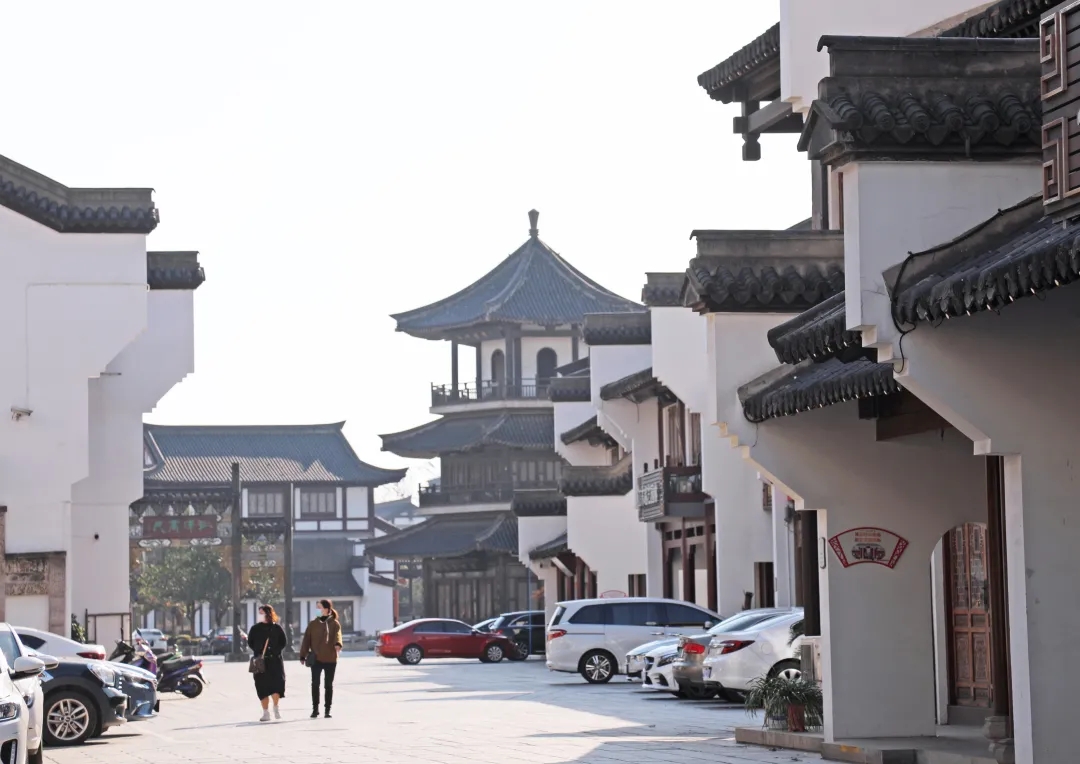
Yancheng Cultural Street is adjacent to Traditional Chinese Medicine Street and Food Street. The neighborhoods are connected by rivers and small bridges, and pavilions, pavilions, pavilions and pavilions are arranged in a staggered manner, showing the charm of Wu and Yue. With Yancheng Museum and Wujin Cultural Museum as the core, the cultural street gathers a number of cultural experience projects such as intangible cultural heritage crafts, antique appreciation, calligraphy and painting art, and intensively displays unique and profound cultural heritage of Changwu Area to tourists.
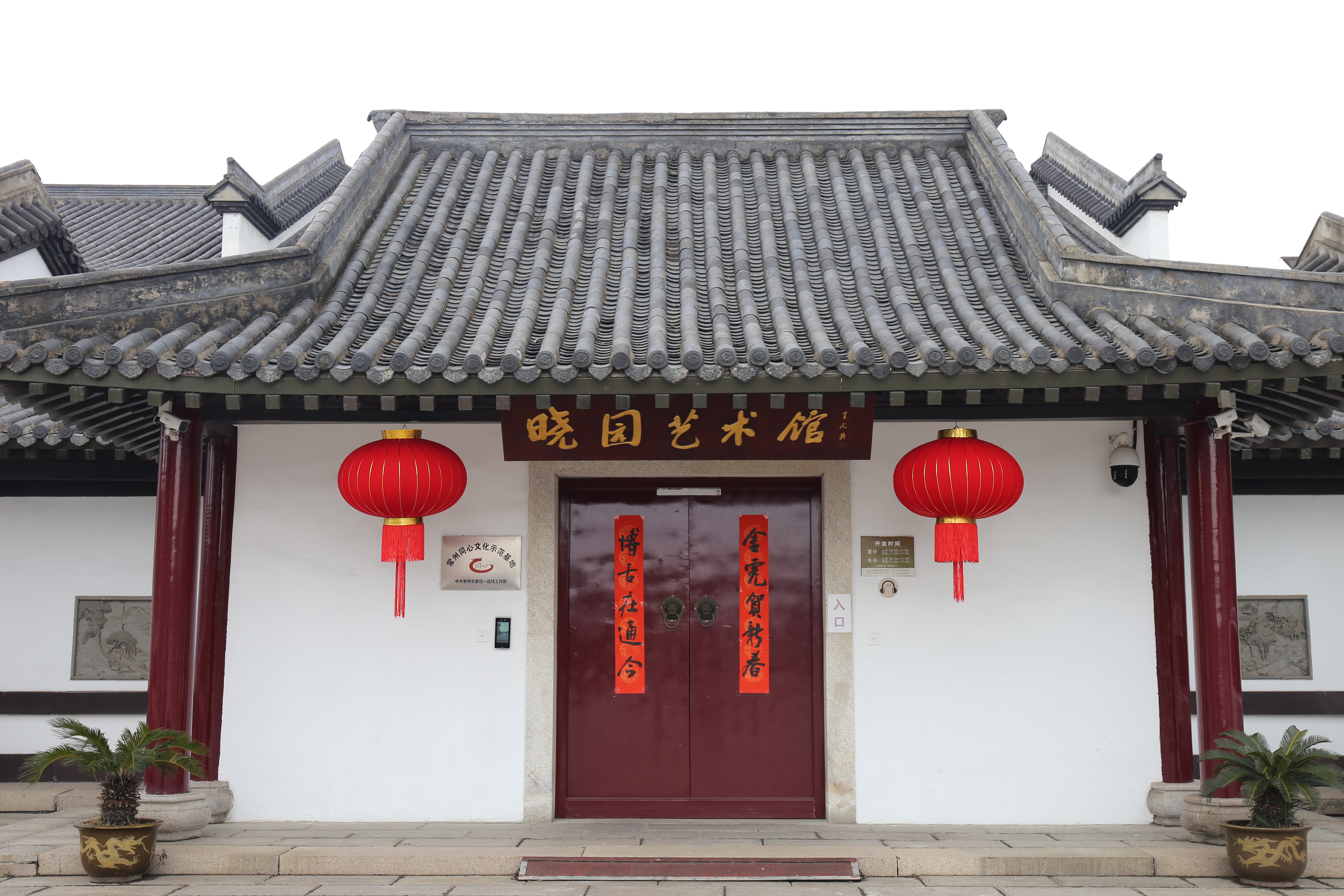
Yuan Xiaoyuan Art Museum is located in Yancheng Culture Street. Mrs. Yuan Xiaoyuan is the first female tax official in China and the first female diplomat in China. She was born in a calligraphy family and used to be named Yuan Xingjie. Her uncle was an imperial teacher. Now the plaque of “Xinhuamen” in Zhongnanhai, Beijing, is just the work of her hands. Her grandfather Ye Chuchen was famous for poetry, and her sister Yuan Jing and niece Qiong Yao were famous for novels. In her youth, Mrs. Xiaoyuan broke through family barriers and went to work study in France alone. She served as Deputy Director of Xiamen Tax Bureau and became the first female tax official in China in the 1930s. She served as Vice Consul of the Consulate of Calcutta, India in the 1940s, and became the first female diplomat in China. She gave up her American citizenship and settled in Beijing in the 1980s. She was a member of the sixth and seventh CPPCC National Committee and President of Beijing International Chinese Character Research Association. Her life experience is a legend. Mr. Xiaoyuan died at the age of 101 in 2003. Wujin District established Yuan Xiaoyuan Art Museum in 2011, which collected and displayed Mrs. Yuan Xiaoyuan’s highly praised works of poetry, calligraphy and painting, as well as photos, certificates and objects from various periods.
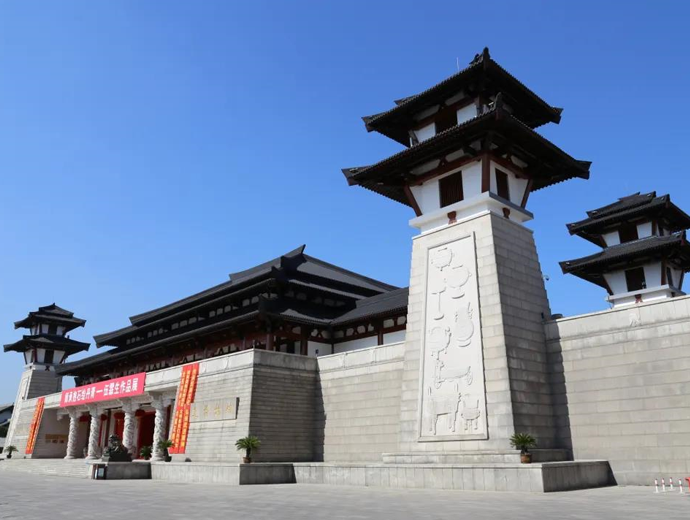
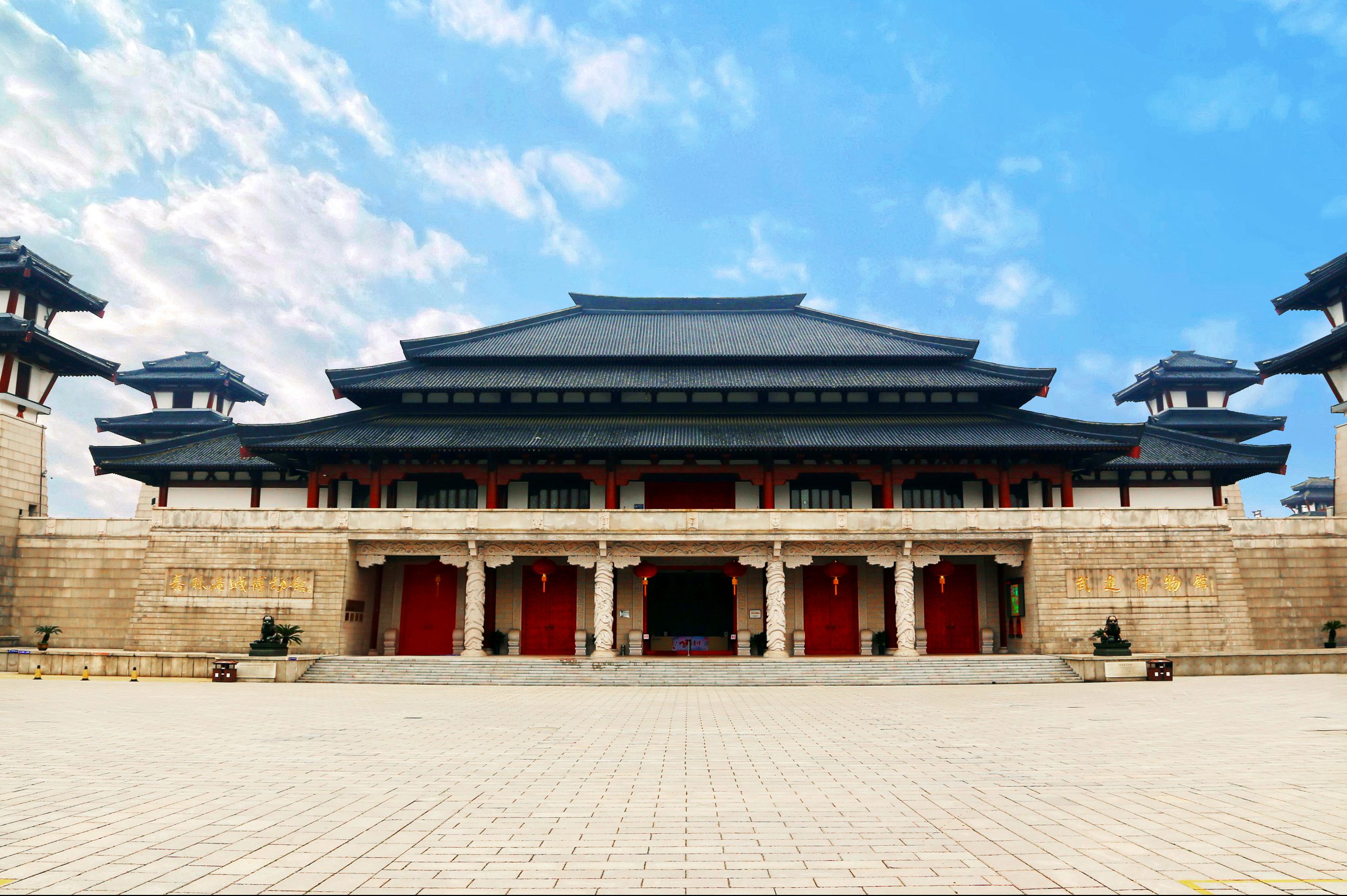
Located in Yancheng Traditional Business Street Culture Street, it is a two-story building facing the East, imitating the characteristics of Han Dynasty, with a magnificent architectural style. Let’s first look at the pair of bronze lions in front of the gate. They are replicas of bronze lion in front of the Qianqing Gate of the Forbidden City in Beijing. The original bronze lion in front of the Qianqing Gate of the Forbidden City was cast during the reign of Yongzheng, and only two pairs were copied after the founding of the People’s Republic of China. One of them is a copy of the pair in front of Yancheng Museum. The other pair of copies is not in China, but kept in the hall of the Chinese Embassy in Germany.
More than 3,000 articles are collected in Yancheng Museum, including 7 first-class products, 41 second-class products and 545 third-class products. The museum is featured by collections like Liangzhu culture jade articles and primitive celadon articles from the Spring and Autumn period, textiles from Ming Dynasty, and works of famous calligraphers and painters in modern times. Jade Cong with 11 animal face patterns, large jade wall with a diameter of 32 cm, and jade belt hook from the Liangzhu Culture period, canoes and primitive celadon tripods from the Spring and Autumn period, and exquisite works of the museum’s collection including embroidered overlapping flower textile with netted patterns from the Ming Dynasty, gold woven textile with Dancing Phoenix Folded Brocade, and the Painting of Two Eagles completed by Liu Haisu, Huang Zhou, Chen Dayu, and Xia Yiqiao together.
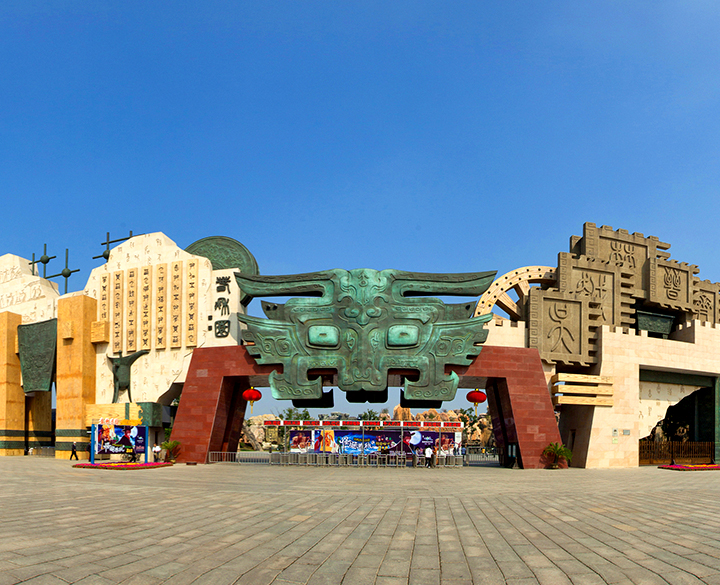
Bronze Gate, as you can see here, is impressive and majestic with a height of 23.8 m and a width of 88 m. A divine gluttonous beast is decorated in the center built in bronze craftsmanship. Ancient Chinese bronze craftsmanship reached its peak in the pre-Qin period. Extremely exquisite bronzes have been handed down from the Shang and Zhou Dynasties to Spring and Autumn and Warring States periods. Gluttonous beast pattern is a common pattern on ancient bronzes as symbol of power and status.
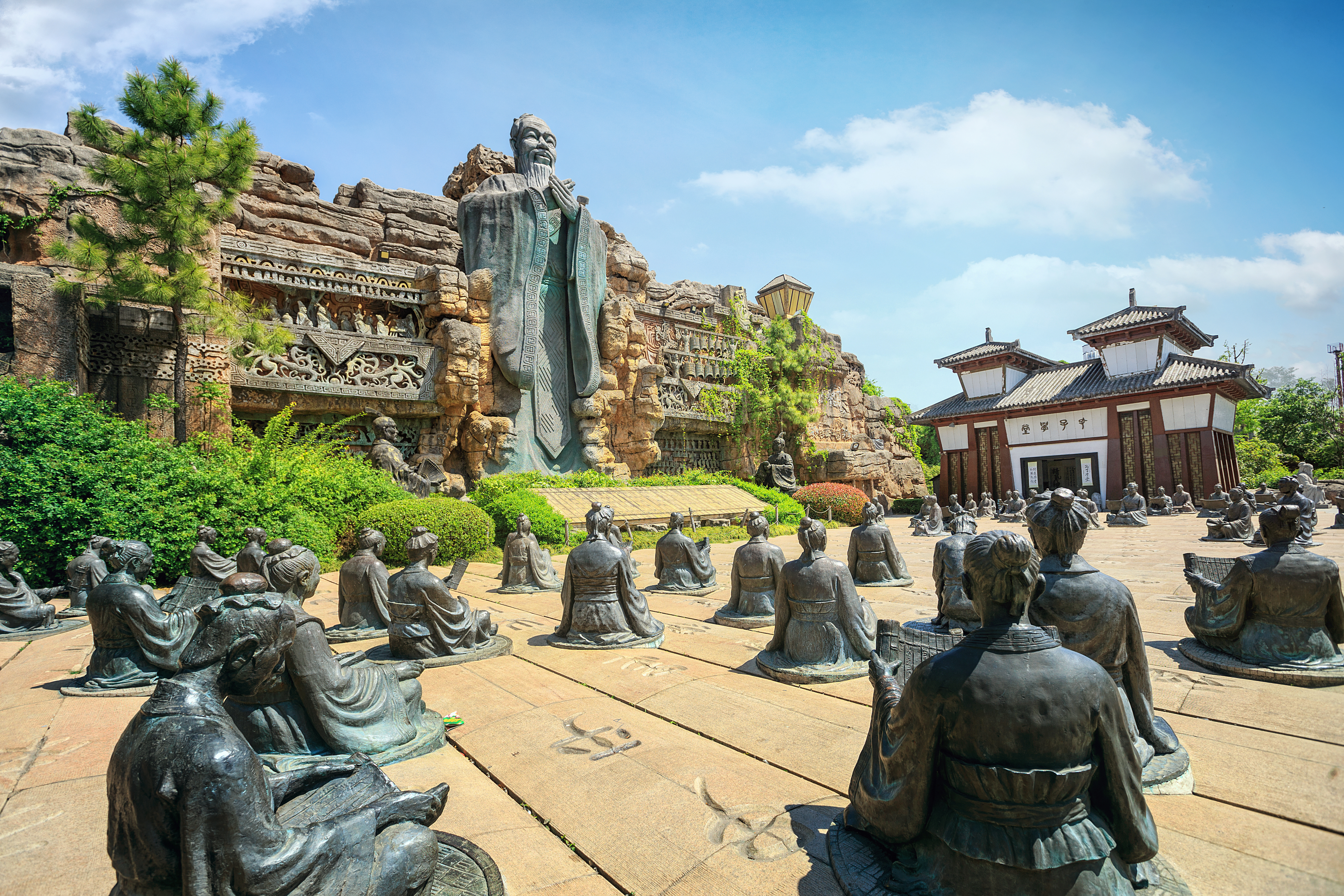
In the Spring and Autumn and Warring States Periods, almost one hundred schools of thought vied for dominance with each other, which gave rise to a galaxy of brilliant personages such as Laozi, Zhuangzi, Confucius, Mozi and Hanfeizi, be them politicians, thinkers, scholars or all-rounders. Such is the provenance of resplendent Chinese culture. The antique garden, covering over 70,000 square meters, unravels the mystery around 12 typical schools like Confucianism, Taoism and Legalism through landscape gardening and traditional sculpture imbued with hi-tech means. As a result, the created scenes epitomize the quintessence of profound thought and prosperous culture throughout the Spring and Autumn Period.
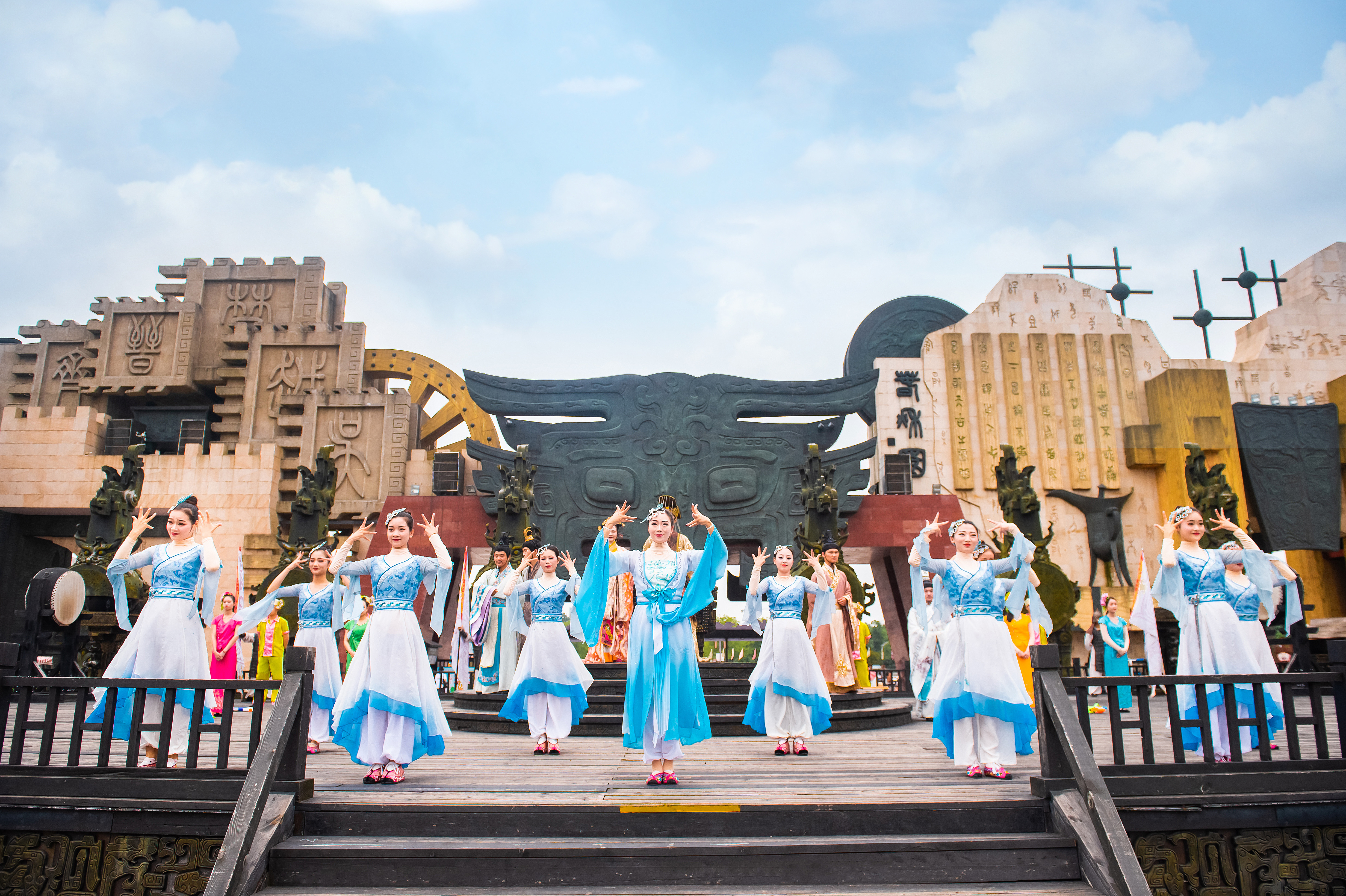
Ancient Chinese worshipped heavenly deities, earthly spirits and dead ghosts. Sacrifice forms part of Chinese ritual. As the venue for sacrificial ceremonies, the altar holds all in utmost awe. This is because people often pray for bliss on the holy venue. What stands in the center of the altar is cauldron, an ancient cooking utensil. It later became a vital sacrificial artifact, which signifies power and prestige. It is said Yu the Lord, when establishing Xia Era, cast nine cauldrons using all metal under the sun as a token of China’s Nine Prefectures. Then emperor has been called the Supreme Lord of Nine Cauldrons. Those ethic regimes desiring to take the central throne have been referred to as willing to ask the weight of the cauldrons. At 9:18 a.m. each day, Bliss-Praying Ceremony occurs here. This is inspired by lords’ bliss-praying to deities during the Spring and Autumn Epoch. That intends to bring to life the historic scenes of ancient Yan State—parade, bliss-praying, singing and dancing, and alliance-forming with modern artistry. And thus the theme “Harmonious Society, Widespread Prosperity” can unfold itself well. The real drama amid astoundingly steady music brings about a magnificent show of the ancient dance and martial arts. Modern cartoons come as an interlude, which makes the bizarre panoply all the more charming. In short, all audiences can enjoy a perfect mix of ancient culture and modern fashion here.