作者: 笨.龍 ༽

  • 6.Three Earth Mounds

    6.Three Earth Mounds


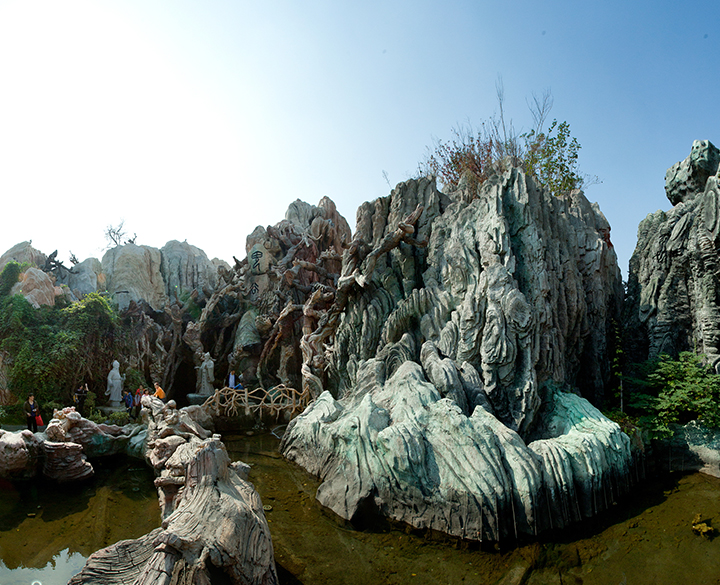
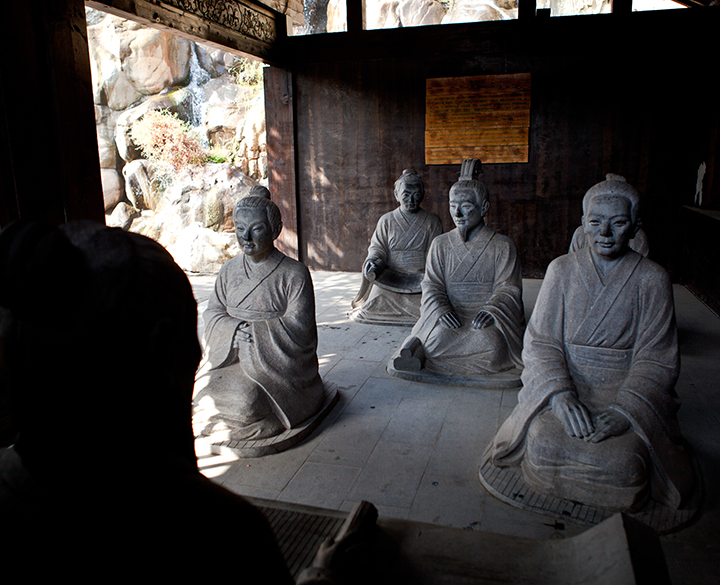
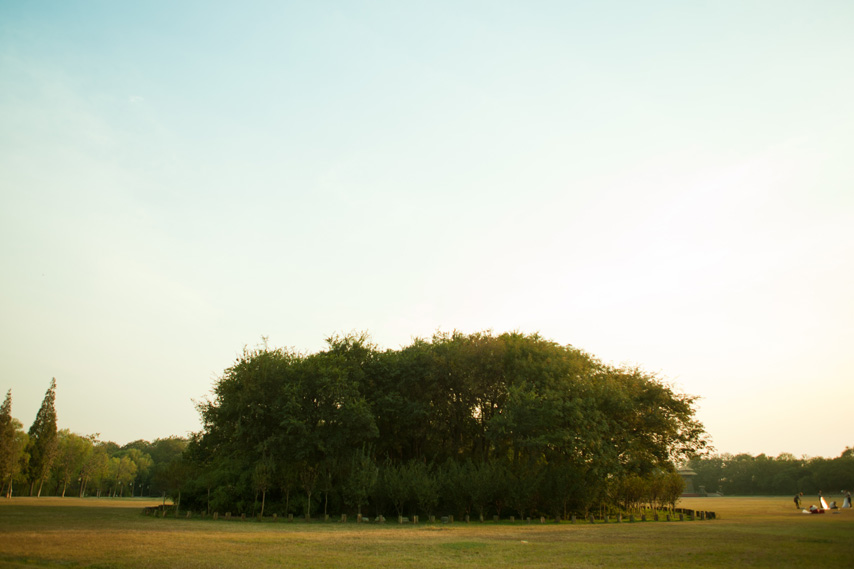
    Now feast our eyes are three tall mounds: Head, Belly and Feet in order. In 1991, archaeologists excavated the head mound, thus discovering the owner’s coffin and nearly 300 burial artifacts. The tomb nestles in the outer city, which reveals its special connection with age-old Yancheng. Put it another way, the deceased should belong to the aristocracy at that time. It is noteworthy that the burial objects include some ornaments and tools like pottery spinning wheels and strings of jade pearls. So, the owner should be a female. Legend says she was one of three daughters of Yan State’s Lord, whose tombs were the mounds mentioned above. Long long ago, the Lord had a kind-hearted daughter called Princess Lark. The gorgeous maiden was the apple of the royal couple. This girl fell into love with lute, chess, calligraphy and painting. Again, she sang and danced with great finesse. Above all, the much-gifted princess was diligent and beautiful. Liucheng nearby had an ambitious prince, who became the Lord Yan’s son-in-law using dishonest means. When the Lord went out one day, the hideous prince got the key to the backyard garden in the name of his wife and stole away White Jade Turtle—the treasure of Yan State. As soon as he knew the news, the Lord got furious and executed his beloved Princess Lark. Later he made clear the truth and felt full of remorse. He buried his lovely daughter once more. This is the origin of the three mounds still alive on the lips of locals.

    Inside and outside Yancheng, there were once hundreds of mounds, of which Stone Grinder Mound occupied 90 mu, the largest of all. These were believed to have relations with the city defense. In 1987, archaeologists excavated Ganjia Mound, from which more than 40 potteries and celadons as well as remaining bones have ever since seen the light of day. This discovery has further proved that these mounds are all ancient tombs.
  • 10.Syncretism

    10.Syncretism


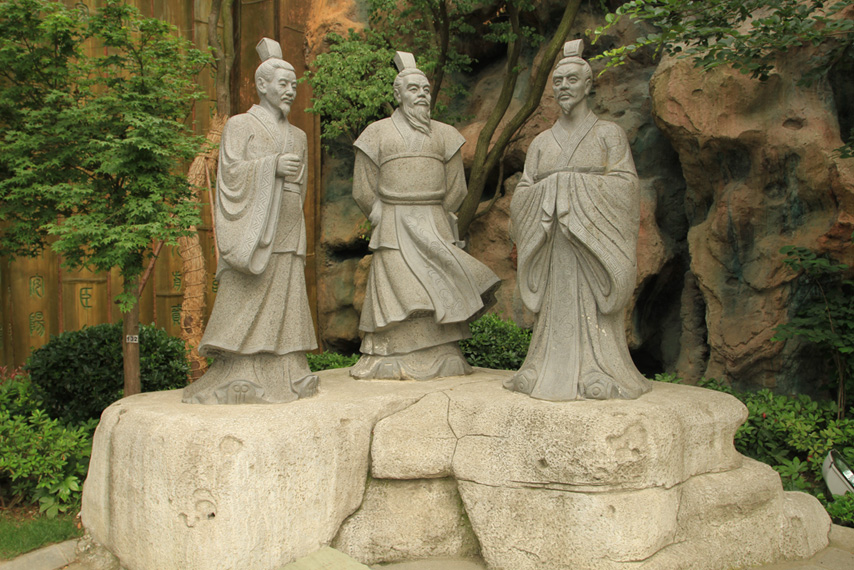
    This miscellaneous school, first appearing in Warring States Epoch, integrated the strengths of all other schools. Its initiator was Lü Buwei. The writing on the giant bamboo scroll is a part of Lü Clan’s Spring and Autumn Annals, a magnum opus in this regard. This grand academic work is really an ancient encyclopedia that came out through nearly a decade’s effort of Lü himself and many talents under his aegis. It offers an important guide to studying the pre-Qin history, culture, politics and economy. The advent of such miscellany demonstrated all thought schools had converged to a certain extent.


  • 9.纵横家

    9.纵横家


    纵横家是战国时代的政治、外交谋略家。分为苏秦“合纵”,张仪“连横”两派。站在洞口那位老者,就是纵横家的祖师爷——鬼谷子。鬼谷子精通天文地理、兵法、武术和奇门八卦,著有《鬼谷子》兵书十四篇传世 (民间称他为王禅老祖)。他创建了中国古代第一军校“战国军庠”,是真正的复合型人才。

    鬼谷子有门徒500人,他的学生,从政治、外交、军事方面,对时局产生极大影响。苏秦、张仪,孙膑、庞涓,都是鬼谷子的高徒。这些人无一不是纵横天下,叱咤风云的大才。另有许多记载,表示毛遂、徐福、甘茂、乐毅、范雎、邹忌等也都师从鬼谷子。

  • 7.内城

    7.内城


    淹城内城郭周长1500米,约3里,外城郭周长3500米,约7里,这里的面积大小正好和《孟子》中记载的“三里之城,七里之郭”相吻合。除此之外,淹城遗址的建城形制还有独特的神秘之处,从上俯瞰,淹城遗址就像是我们中国本土宗教道教的风水八卦图,据传,淹城的外城河最早有八条水溪,四个水门。经香港著名易学专家麦荣耀先生实地察看,认为恰好与《易经》中的八卦相吻合。依时间可以判定,淹城是历史上最早按照《易经》而建立的城池,因此又有了“中国风水第一城”的美称。

  • 11.Taoism

    11.Taoism


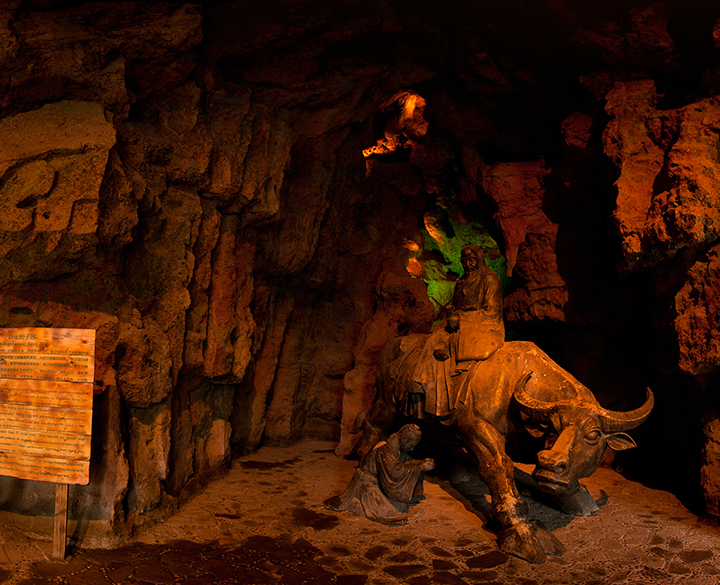
    Legend says Laozi the grandmaster established this school. All its followers argued “the way of following nature” and “the importance of doing nothing”. In particular, Laozi himself and Zhuangzi separately composed Tao Te Ching: The Way and its Virtues and Zhuangzi: Wandering of the Way.

    Laozi, also called Laodan, has been revered as the “Old One”. It is said this master later headed west on a black ox. Hangu Pass’s guard-in-chief Yin Xi, on the Sky-Watching Pavilion, suddenly saw a purple vapour rising in the east. He said to his underlings a sage must be coming here soon. As he had said, Laozi on an ox arrived slowly within 3 days. Yin Xi asked the master to leave him some words, otherwise he would not allow him to take leave. Then Laozi the Lord wrote Tao Te Ching, a short book of 5,000 characters influencing later China and the world at large.

  • 10.杂家

    10.杂家


    战国时期出现,以博采众家之长为特色,由秦国丞相吕不韦一手创立。前方山体上的巨型书简上所雕刻的文字是杂家的代表作《吕氏春秋》。《吕氏春秋》是吕不韦和他的三千门客,历时近十年编写成的一部古代百科全书,是研究先秦历史、文化、政治、经济情况重要的依据。通过杂家也可以看到,到战国晚期,诸子百家的思想已经在一定程度上合流。

  • 8.孙武草庐

    8.孙武草庐


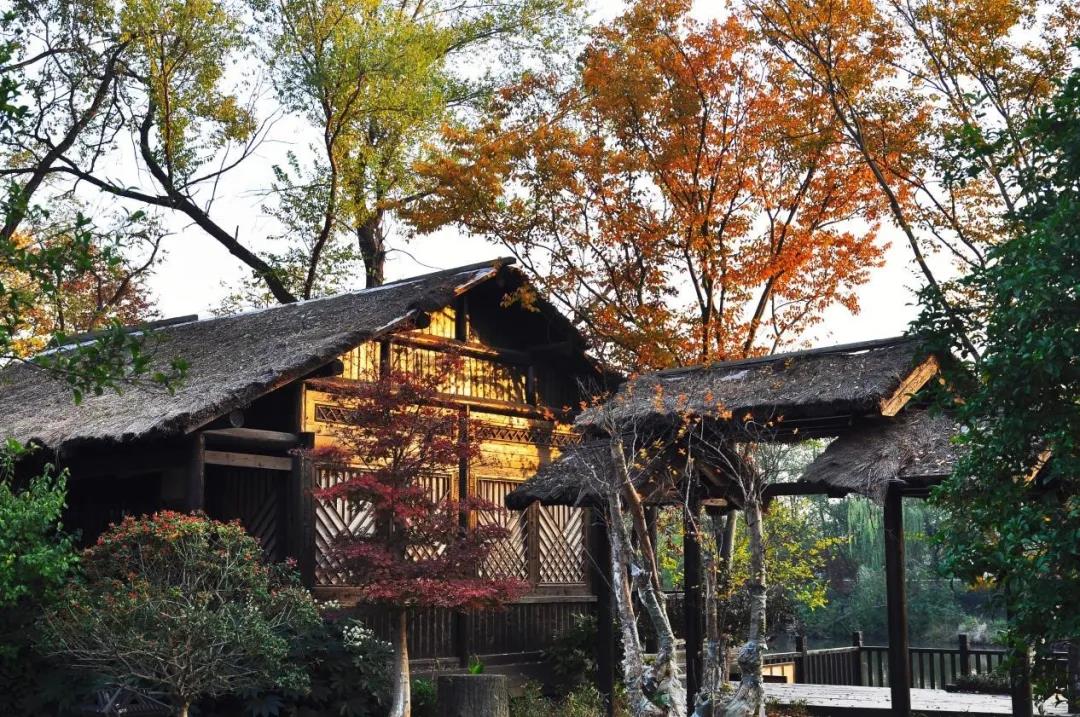
    此处本是一带茅屋。相传兵圣孙武曾在此处隐居,躲避战乱,研究兵法。后人为纪念孙武,将他居住过的茅屋重新修缮。2019年,这处茅屋经再次修缮、改造,增加了品茶、书画、养生、休闲等功能,向游客开放。

  • 7.Inner City

    7.Inner City


    Yancheng’s inner city sprawls 1,500 meters, about 3 li (a Chinese unit of length, 1 li=500 meters) while the outer city stretches 3,500 m or 7 li. Their areas fit well in with the relevant account in Mencius. Besides, the urban design has its own unique mystery. In a bird’s-eye view, the entire relic site looks quite like the Eight Trigrams according to Taoism and Geomancy. It is said the outmost moat had eight brooks and four watergates at the earliest time. Hong Kong based geomancer Mai Rongyao, having investigated the site, concluded the eight brooks represent eight trigrams in I Ching. The construction time shows Yancheng was the earliest city in the world to follow the mysterious geomancy. So, it is also called “First City of Chinese Fengshui”.


  • 12.Mohism

    12.Mohism


    Founder of Mohism is Mo Di. Those engaged in debates were called “Mobian”. Those engaged in martial arts were called “Moxia”. The leader is called “Ju Zi”. Most of the Mohists come from lower status, with strict internal organization and discipline. “Those who kill will die for it and those who hurt will be punished”. They took promoting benefits and eliminating harm as educational purpose, and pay special attention to hard practice. Core ideas of Mohist School included “Universal Love”, “Anti-offense” and “Sparing Usage”, which advocate respecting talents and appointing capable people. Mohism and Confucianism were known as Famous Theories in the pre-Qin period.

    In addition, Mohism studied mechanics, optics, logic and military attack and defense. Mohist’s Mojing (Mohist Canon) is similar to an encyclopedia, in which physical principles such as “Small Hole Imaging” were first put forward.

  • 11.道家

    11.道家


    传说为老子所创,代表人物老子、庄子。以“道法自然”、“清静无为”为思想核心,代表论著《道德经》、《庄子》。

    老子,即李聃,以其睿智,被尊称为“老子”。传说老子晚年乘青牛西去,函谷关的守城官尹喜在观气楼上突然发现东方升起一团紫气,就对旁边的人说,必定有贵人来。果然,不出3天,老子骑着一头青牛缓缓而来。尹喜要求老子留下他的智慧,作为放他出关的条件。于是老子在一块灵石上写下了五千言的《道德经》。