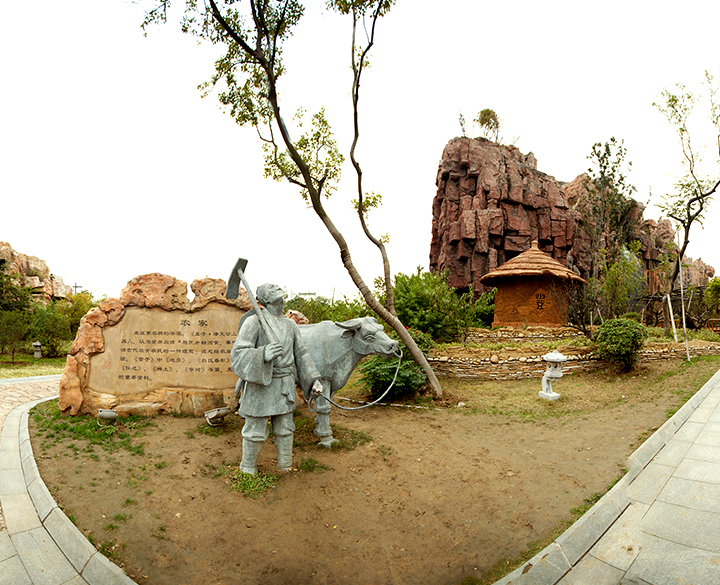
在古代,医家就是指医生。中国历代曾出现过许多名医,如东汉张仲景、神医华佗、药王孙思邈等。春秋时期的名医是神医扁鹊,扁鹊原名叫秦越人,由于他医术高超,人们便以上古时代神医“扁鹊”的名号来称呼他。
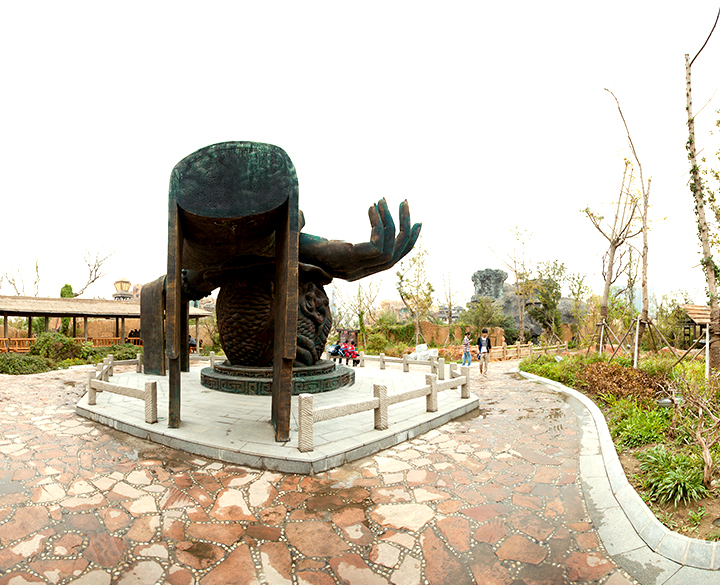
广场中心的这个雕塑是医生把脉的场景,据《史记》中记载,扁鹊是最早将脉诊应用于临床的医生。扁鹊是中医学的开山鼻祖,也是中国历史上第一个有正式传记的医学家,他创造了“望、闻、问、切”四诊法,为中国医学做出了巨大的贡献。


在古代,医家就是指医生。中国历代曾出现过许多名医,如东汉张仲景、神医华佗、药王孙思邈等。春秋时期的名医是神医扁鹊,扁鹊原名叫秦越人,由于他医术高超,人们便以上古时代神医“扁鹊”的名号来称呼他。
广场中心的这个雕塑是医生把脉的场景,据《史记》中记载,扁鹊是最早将脉诊应用于临床的医生。扁鹊是中医学的开山鼻祖,也是中国历史上第一个有正式传记的医学家,他创造了“望、闻、问、切”四诊法,为中国医学做出了巨大的贡献。


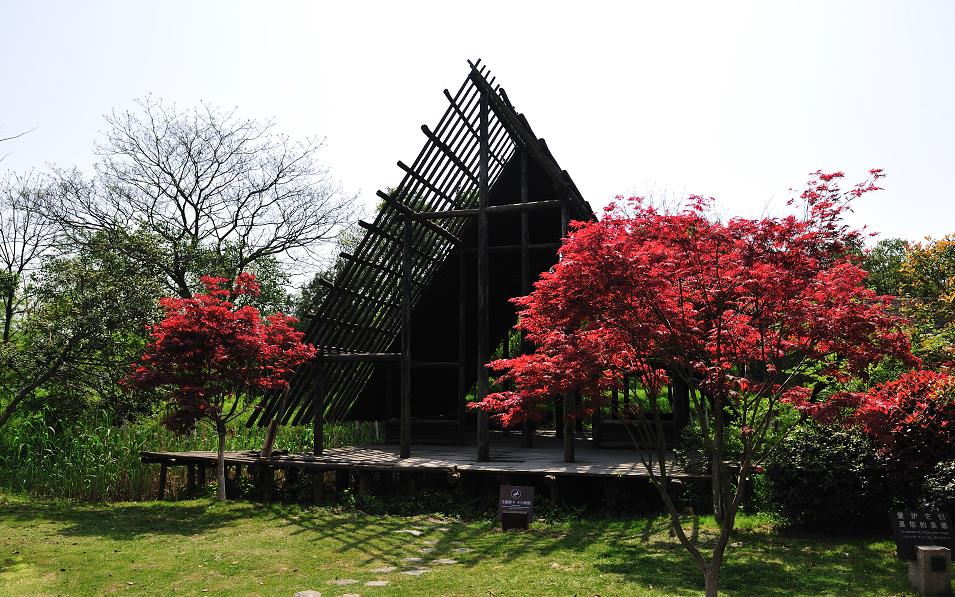
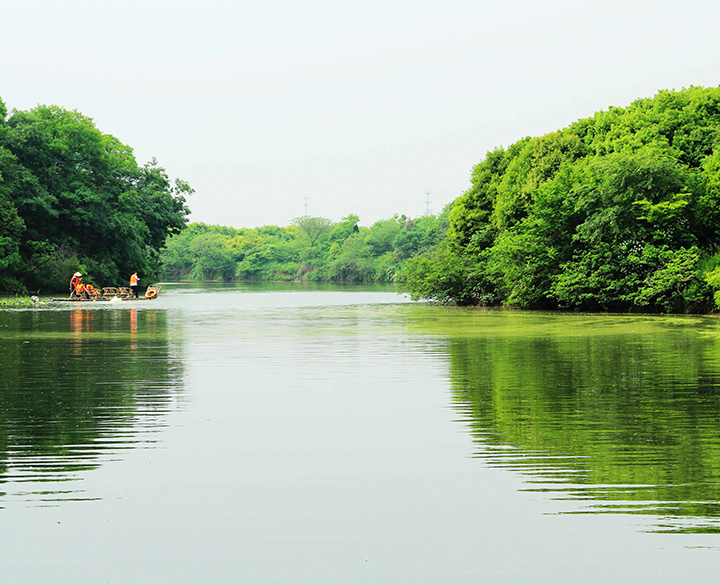
Now we can see the second moat of age-old Yancheng. The moat is 4 m deep on the average, but may be a dozen meters or so deep as well. The width, normally 30-50 meters, may be 60 meters at most. There have been 4 canoes unearthed from the moat thus far. The 11 meter-long canoe now belongs to the National Museum of China and the 4.2 meter-long lies in Nanjing Museum. The remaining two have been collected in Wujin District Yancheng Museum. Researchers had dated the old-time canoes using the carbon-14 isotope. In particular, the canoe as long as 7.45 meters has been 2800 years old. The oldest and best-preserved boat discovered ever in China has been dubbed the “First Boat under the Sun”.


这里可以看到三个高大的土墩。按照顺序,最前面的叫头墩,中间的是肚墩,后面是脚墩。考古学家1991年对头墩进行考古挖掘,在里面发现葬具和各种随葬品近300件。这座墓葬在外城,说明墓主人与淹城有着一种特殊的关系,其地位和身份在当时都比较显赫。值得注意的是在随葬品中还有陶纺轮、玉珠串等装饰物和用具,说明墓主人是一女性,相传三个墩为淹君女儿的墓葬。这里又有一个美丽的传说,话说淹君有个女儿叫百灵公主,长得如花似玉,是淹君夫妇的掌上明珠。公主心地善良,并且酷爱琴、棋、书、画,且能歌善舞,是个才貌双全的勤劳姑娘。淹城邻近有个留城,野心勃勃的留王子,骗取了淹王的信任被招为驸马。有一天,驸马乘淹王外出之际,盗用公主的名义,骗得了后花园的钥匙,偷走了淹国的护城之宝——白玉龟,淹君回城知道玉龟被盗,大发雷霆,不分青红皂白,便把百灵公主处死,后来弄清事实真相后,后悔莫及,将百灵公主重新安葬。后来淹城百姓将这三个土墩称为头墩、肚墩、脚墩。
早先在淹城内外,还散布着数百个土墩,最大的是磨盘墩,面积达90亩,以前认为与城防有关。1987年,考古学家对其中的干家墩进行挖掘,出土了40多件精致的陶器和青瓷器,以及部分骨骼,进一步证实这些土墩为古墓葬群。


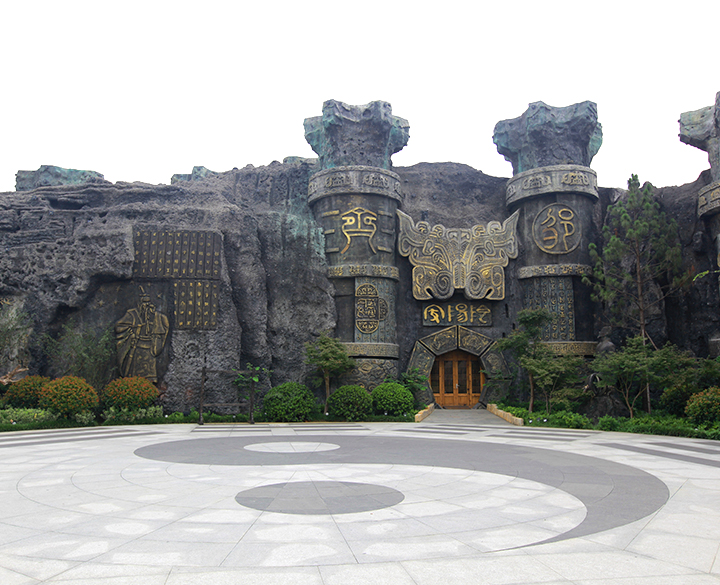
This school points to politicians and diplomats in Warring States Period. The school mainly falls into two factions: Vertical Alliance and Horizontal Collaboration. The old man standing on the cave-mouth is Guiguzi, the forefather of this overawing school. The master had an outstanding command of astrology, geography, stratagems, martial arts, unique numerological arts and eight trigrams. He wrote a masterpiece consisting of 14 chapters, called Guiguzi. The master even established “Military Academy of Warring States”. He has been venerated as the Old Patriarch of Wang Chan. Indeed, he was a grandmaster of many ways.
Guiguzi boasted of having 500 disciples, including those political, diplomatic and military personages like Su Qin, Zhang Yi, Sun Bin and Pang Juan. All these had almost made history or influenced the states they each served. It is alleged many other heroes such as Mao Sui, Xu Fu, Gan Mao, Yue Yi, Fan Ju and Zou Ji all took him as their master.


Now feast our eyes are three tall mounds: Head, Belly and Feet in order. In 1991, archaeologists excavated the head mound, thus discovering the owner’s coffin and nearly 300 burial artifacts. The tomb nestles in the outer city, which reveals its special connection with age-old Yancheng. Put it another way, the deceased should belong to the aristocracy at that time. It is noteworthy that the burial objects include some ornaments and tools like pottery spinning wheels and strings of jade pearls. So, the owner should be a female. Legend says she was one of three daughters of Yan State’s Lord, whose tombs were the mounds mentioned above. Long long ago, the Lord had a kind-hearted daughter called Princess Lark. The gorgeous maiden was the apple of the royal couple. This girl fell into love with lute, chess, calligraphy and painting. Again, she sang and danced with great finesse. Above all, the much-gifted princess was diligent and beautiful. Liucheng nearby had an ambitious prince, who became the Lord Yan’s son-in-law using dishonest means. When the Lord went out one day, the hideous prince got the key to the backyard garden in the name of his wife and stole away White Jade Turtle—the treasure of Yan State. As soon as he knew the news, the Lord got furious and executed his beloved Princess Lark. Later he made clear the truth and felt full of remorse. He buried his lovely daughter once more. This is the origin of the three mounds still alive on the lips of locals.
Inside and outside Yancheng, there were once hundreds of mounds, of which Stone Grinder Mound occupied 90 mu, the largest of all. These were believed to have relations with the city defense. In 1987, archaeologists excavated Ganjia Mound, from which more than 40 potteries and celadons as well as remaining bones have ever since seen the light of day. This discovery has further proved that these mounds are all ancient tombs.


This miscellaneous school, first appearing in Warring States Epoch, integrated the strengths of all other schools. Its initiator was Lü Buwei. The writing on the giant bamboo scroll is a part of Lü Clan’s Spring and Autumn Annals, a magnum opus in this regard. This grand academic work is really an ancient encyclopedia that came out through nearly a decade’s effort of Lü himself and many talents under his aegis. It offers an important guide to studying the pre-Qin history, culture, politics and economy. The advent of such miscellany demonstrated all thought schools had converged to a certain extent.


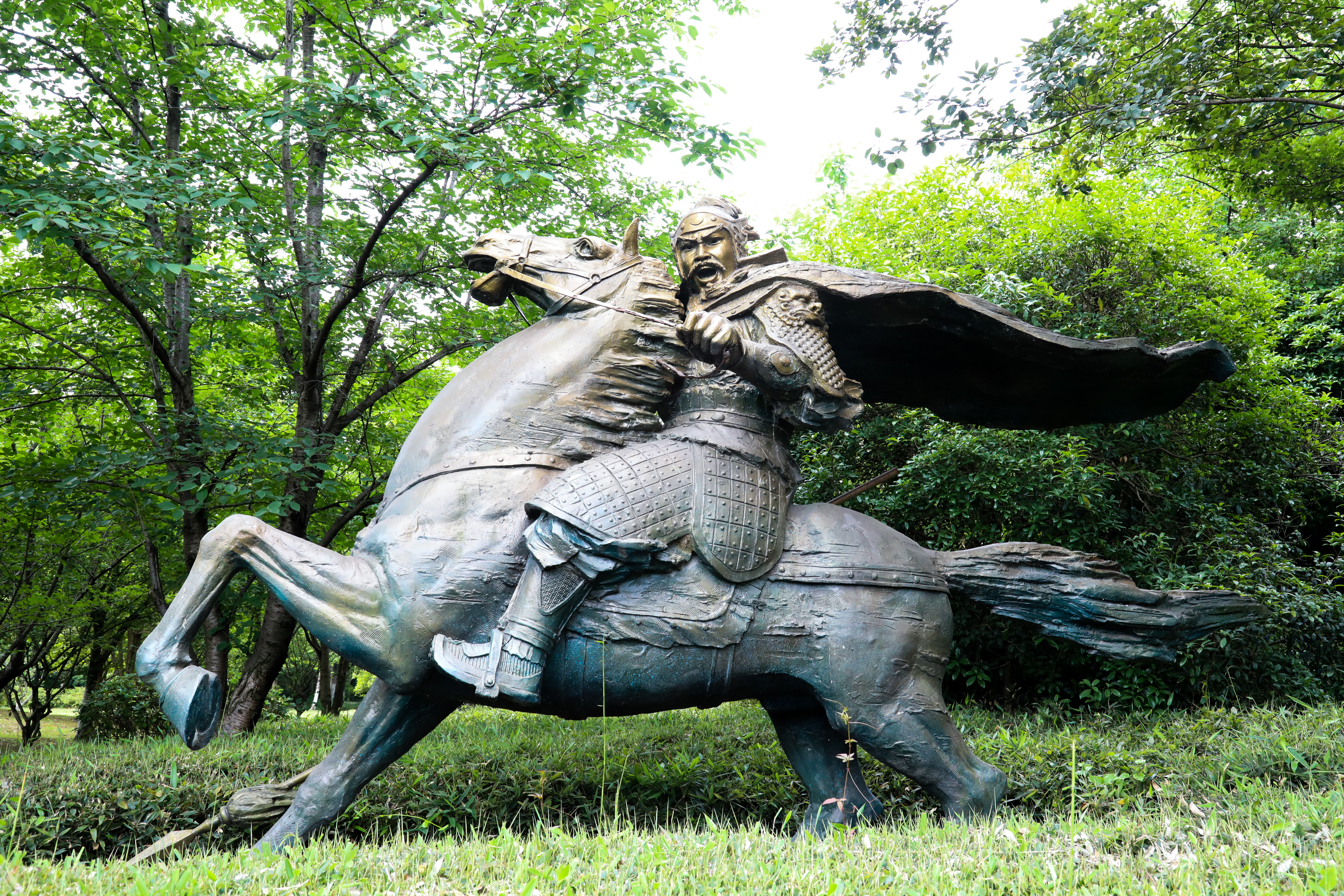
纵横家是战国时代的政治、外交谋略家。分为苏秦“合纵”,张仪“连横”两派。站在洞口那位老者,就是纵横家的祖师爷——鬼谷子。鬼谷子精通天文地理、兵法、武术和奇门八卦,著有《鬼谷子》兵书十四篇传世 (民间称他为王禅老祖)。他创建了中国古代第一军校“战国军庠”,是真正的复合型人才。
鬼谷子有门徒500人,他的学生,从政治、外交、军事方面,对时局产生极大影响。苏秦、张仪,孙膑、庞涓,都是鬼谷子的高徒。这些人无一不是纵横天下,叱咤风云的大才。另有许多记载,表示毛遂、徐福、甘茂、乐毅、范雎、邹忌等也都师从鬼谷子。


淹城内城郭周长1500米,约3里,外城郭周长3500米,约7里,这里的面积大小正好和《孟子》中记载的“三里之城,七里之郭”相吻合。除此之外,淹城遗址的建城形制还有独特的神秘之处,从上俯瞰,淹城遗址就像是我们中国本土宗教道教的风水八卦图,据传,淹城的外城河最早有八条水溪,四个水门。经香港著名易学专家麦荣耀先生实地察看,认为恰好与《易经》中的八卦相吻合。依时间可以判定,淹城是历史上最早按照《易经》而建立的城池,因此又有了“中国风水第一城”的美称。


Legend says Laozi the grandmaster established this school. All its followers argued “the way of following nature” and “the importance of doing nothing”. In particular, Laozi himself and Zhuangzi separately composed Tao Te Ching: The Way and its Virtues and Zhuangzi: Wandering of the Way.
Laozi, also called Laodan, has been revered as the “Old One”. It is said this master later headed west on a black ox. Hangu Pass’s guard-in-chief Yin Xi, on the Sky-Watching Pavilion, suddenly saw a purple vapour rising in the east. He said to his underlings a sage must be coming here soon. As he had said, Laozi on an ox arrived slowly within 3 days. Yin Xi asked the master to leave him some words, otherwise he would not allow him to take leave. Then Laozi the Lord wrote Tao Te Ching, a short book of 5,000 characters influencing later China and the world at large.


战国时期出现,以博采众家之长为特色,由秦国丞相吕不韦一手创立。前方山体上的巨型书简上所雕刻的文字是杂家的代表作《吕氏春秋》。《吕氏春秋》是吕不韦和他的三千门客,历时近十年编写成的一部古代百科全书,是研究先秦历史、文化、政治、经济情况重要的依据。通过杂家也可以看到,到战国晚期,诸子百家的思想已经在一定程度上合流。