博客

  • 7.Agriculturalism

    7.Agriculturalism


    The best paragon of Agriculturalism was Xu Xing, who asserted himself as a descendant of Shennong. He studied hard agricultural technologies, but proposed the political idea that “lord and his people shall both farm the land”. That most shows his thought of equality between the ruling class and the populace.

    Xu Xing leading his disciples worked hard at farming, so that “they’ve received good harvests of five grains, thus leading a well-off life”. Ancient China’s five grains refer to rice, glutinous millet, foxtail millet, wheat and soybean. Between Warring States Period and the Qin-Han Period, the Chinese mainly consumed five vegetables: sunflower, pulse-leaf, leek, scallion and garlic. Those plants mentioned by The Book of Odes amount to 132, including over 20 vegetables. As time went by, some species had faded out of the table.


  • 4.岳飞点将台

    4.岳飞点将台


    前方左手边大家看到的这块高出的土墩是岳飞点将台遗址。在宋朝的建炎年间,金兵进攻常州,岳飞元帅曾率军驻扎在淹城。点将台因此而得名。

  • 6.阴阳家

    6.阴阳家

    “阴阳”最早见于《易经》,用来解释天地万物的源头。“五行”的概念最早见于《尚书》也就是大家所熟知的“金、木、水、火、土”。这两者到战国时才渐渐合流,成为了“阴阳五行学派”也就是我们现在看到的阴阳家。

    阴阳家景区以一块巨大的黑色陨石山体为背景,以北斗七星、八卦符号等体现阴阳之学。山体前方这一位仰首向天的,是阴阳家的代表人物——齐国人邹衍,他学识渊博,运用阴阳五行学说来解释宇宙演变和历史兴衰,因此被人们称为“谈天衍”。邹衍是“稷下学宫”的著名学者。“稷下学宫”,是中国最早的最高学府、科学院(据学者推算,与柏拉图的“雅典学园”同时期,仅晚了20年)。相传邹衍为了推行自己的学说,曾到各国游历,并且受到了各国国君尊崇。据说他到北方的燕国时,燕王亲自抱着扫帚为他扫地开路并拜他为师,这是圣人孔子、孟子都没有享受过的礼遇。由此可见,他的学说在当时备受欢迎。

  • 3.Yancheng Antique Dwellings

    3.Yancheng Antique Dwellings


    What pleases the eye to the left is a row of rustic dwellings, which imitate the ancient cottages of the Spring and Autumn Epoch. Owing to the heavy rainfall here, these folk houses, in fact wood structures, had deteriorated with great speed. Within the relics park, there is therefore no such dwelling unscathed till now. What stand the test of time are simply the cities along with moats and numerous antiquities excavated all these years.

  • 8.School of Doctors

    8.School of Doctors

    In ancient China, this school points to doctors, in particular famous ones like Eastern Han’s Zhang Zhongjing and Hua Tuo, Tang’s Sun Simiao the King of Medicine. Bian Que in the Spring and Autumn Period stood out of these doctors through the ages. Qin Yueren was called Bianque because his superb medicine, in the hearts of the people, matched well the magical doctor in the primeval past.

    The sculpture in the center of the square shows how the wondrous doctor took his patient’s pulse. According to The Book of the Grand Historian, Bianque first applied pulse-based diagnosis in clinical treatment. The forefather of Chinese medicine was the first of his kind officially recorded in history. He initiated four diagnostic methods: watching, smelling, asking and pulse-taking. Such tremendous contributions have earned him a niche in history.

  • 7.农家

    7.农家


    代表人物为许行。许行以神农氏的后人自居,在研究农业生产技术的同时,提出了“君民并耕”的政治主张,意在劳动者自食其力的平等思想。

    许行带领他的弟子辛勤劳作,换来的是“五谷丰登,丰衣足食”。古代的五谷一般是指稻、黍、稷、麦、菽,即水稻、黄米、小米、小麦、黄豆。战国及秦汉时期,我国人民食用的主要蔬菜有葵、霍、韭、葱、蒜这五种。《诗经》里曾提到132种植物,其中作为蔬菜的就有20余种,随着时代变迁,其中部分品种已退出了我们的餐桌。

  • 4.Generalissimo Yue Fei’s General-Appointing Terrace

    4.Generalissimo Yue Fei’s General-Appointing Terrace

    What we can see in the front left-hand side is the relic site where Yue Fei, a generalissimo of the Southern Song, ever appointed major generals. When Jurchen army invaded the frontier during Jianyan Period, the generalissimo along with his troops was stationed here to fight the enemies.

  • 5.内城河

    5.内城河


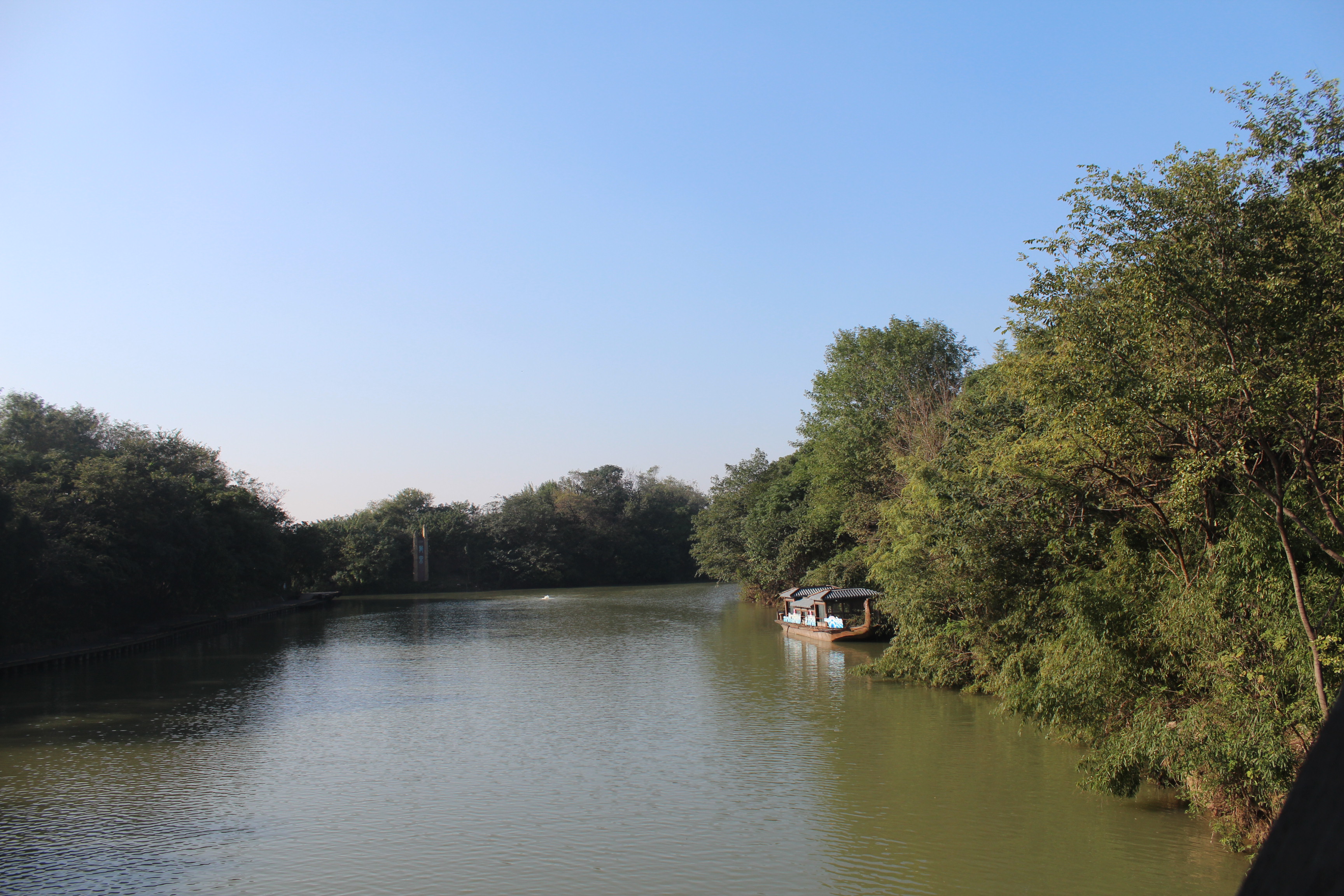
    现在各位看到的是淹城的第二道护城河——内城河。淹城的护城河水平均水深4米,最深的地方有十几米;河宽30—50米,最宽的地方达60米。在内城河里先后出土过4条独木舟,其中一条长11米的独木舟被国家博物馆收藏,一条4.2米的被南京博物院收藏,还有两条收藏于武进淹城博物馆。科研人员对独木舟进行碳14测定以确认其制造年代。其中一条长7.45米的独木舟经测定,距今已有2800年的历史。这是我国迄今发现的年代最悠久、保存最完整的古独木舟,因而有“天下第一舟”的美称。

  • 8.医家

    8.医家

    在古代,医家就是指医生。中国历代曾出现过许多名医,如东汉张仲景、神医华佗、药王孙思邈等。春秋时期的名医是神医扁鹊,扁鹊原名叫秦越人,由于他医术高超,人们便以上古时代神医“扁鹊”的名号来称呼他。

    广场中心的这个雕塑是医生把脉的场景,据《史记》中记载,扁鹊是最早将脉诊应用于临床的医生。扁鹊是中医学的开山鼻祖,也是中国历史上第一个有正式传记的医学家,他创造了“望、闻、问、切”四诊法,为中国医学做出了巨大的贡献。

  • 5.Inner Moat

    5.Inner Moat


    Now we can see the second moat of age-old Yancheng. The moat is 4 m deep on the average, but may be a dozen meters or so deep as well. The width, normally 30-50 meters, may be 60 meters at most. There have been 4 canoes unearthed from the moat thus far. The 11 meter-long canoe now belongs to the National Museum of China and the 4.2 meter-long lies in Nanjing Museum. The remaining two have been collected in Wujin District Yancheng Museum. Researchers had dated the old-time canoes using the carbon-14 isotope. In particular, the canoe as long as 7.45 meters has been 2800 years old. The oldest and best-preserved boat discovered ever in China has been dubbed the “First Boat under the Sun”.